Introduction
Baking a batch of brownies only to realize you’re out of eggs can be a frustrating surprise. Other times, you might need to make brownies without eggs because of dietary choices (like a vegan diet), allergies, or even the rising cost or shortage of eggs (The Best Egg Substitutes for Brownies — Orson Gygi Blog). Whatever the reason, home bakers often wonder “Can you make brownies without eggs?” The answer is absolutely yes – with the right egg substitute, your brownies can turn out just as delicious and decadent as traditional ones.
Eggs play several critical roles in brownie recipes. They provide binding (holding the ingredients together so the brownies don’t fall apart), moisture (giving that soft, fudgy texture), and a bit of structure and leavening (helping the batter puff up slightly and set into a chewy crumb). In a classic brownie, eggs contribute to the rich batter that emulsifies fats and liquids smoothly, and as brownies bake, eggs create tiny air pockets that give the brownies a subtle lift. Because brownies rely on eggs for these functions, choosing a good substitute is important – a great egg replacer will mimic the moisture, binding, and mild leavening that eggs usually provide.
In this guide, we’ll explore the best egg substitutes for brownies, both homemade options using common pantry ingredients and convenient commercial egg-replacer products. You’ll learn how each substitute works, which brownie texture (fudgy, cakey, or chewy) it’s best suited for, and how to use it (with proper measurements). We’ve also included an ultimate egg-free brownie recipe that’s been tested to produce fudgy, mouth-watering brownies without a single egg. By the end, you’ll know how to make brownies without eggs in a way that matches your taste and texture preferences. Let’s dive into the world of eggless brownies!
How Eggs Work in Brownies (And What You Need in a Substitute)
Understanding why eggs are used in brownies will help you choose the right substitute. In baking, eggs are multi-taskers. Here’s what they do in a typical brownie batter:
- Binding: Eggs act as the glue that holds all the ingredients together. The proteins in eggs coagulate as they bake, giving brownies structure so they don’t crumble apart). This binding ensures a brownie holds its shape when cut, yielding those neat squares or bars.
- Moisture and Fudgy Texture: The liquid content of eggs adds moisture to the batter, which is crucial for that soft, fudgy interior we love. Egg yolks also contain fat which contributes to a tender, rich crumb. In fact, part of what makes a brownie fudgy (as opposed to cakey) is a higher ratio of fat and sugar to flour – and eggs (especially the yolks) supply some of that fat. The result is a moist, melt-in-your-mouth center.
- Leavening and Structure: Brownies are not meant to rise as much as cakes, but eggs do help the batter puff slightly. Many classic brownie recipes have no baking powder at all; instead, the air beaten into eggs and the steam they release in the oven gives a bit of lift. Egg whites, in particular, can trap air – that’s why whipping eggs can lead to a lighter, airy crumb in “cakey” brownies. Eggs also help create that delicate, shiny crust on top of brownies by bringing proteins to the surface that dry out and form a thin film during baking.
Because eggs perform these different functions, an ideal egg substitute in brownies needs to bind the batter, add moisture, and contribute a little lift or structure. Some substitutes excel at one function (for example, flaxseed “eggs” are great binders), while others add mostly moisture or leavening. You might even combine two substitutes to cover all bases. Also, consider the type of brownie you want:
- Fudgy brownies (dense, moist, rich) typically have a higher fat-to-flour ratio and less leavening. Here, an egg substitute that adds moisture and binding (but not too much air) is ideal.
- Cakey brownies (lighter, more cake-like crumb) have more flour or added leavener. For these, a substitute that provides extra lift or dries out the crumb a bit (so it’s not too dense) can help.
- Chewy brownies (somewhere in between fudgy and cakey, with a toothsome bite) benefit from a balance – good binding and some moisture, but not as gooey as fudgy.
As we explore substitutes, we’ll note which brownie style each one best complements. With a bit of experimentation, you’ll find the egg replacement that makes your perfect brownie.
Best Homemade Egg Substitutes for Brownies
Home kitchens are full of ingredients that can successfully replace eggs in brownies. These DIY substitutes are easy, inexpensive, and effective. Here are the top homemade egg alternatives and how to use them:
Flaxseed or Chia “Egg”
How to use: A flax or chia “egg” is made by mixing 1 tablespoon of ground flaxseed or ground chia seeds with 3 tablespoons of water for each egg you’re replacing). Let the mixture sit for about 5 minutes until it gels into a thick, egg-like consistency. This gel acts very much like an egg in batters.
Why it works: When flax or chia seeds are ground and mixed with water, they release mucilage (a sticky, soluble fiber) that thickens up and binds ingredients together. Flaxseed is rich in proteins and healthy fats that are surprisingly similar to those in eggs, which is why flax eggs are one of the most popular vegan baking substitutes. In brownies, a flax or chia egg provides excellent binding to hold the brownie together, and adds moisture for a tender texture.
Effect on brownies: Brownies made with flaxseed “eggs” tend to be thick, moist, and fudgy. In fact, many bakers report that flax eggs make brownies even denser and chewier – perfect for fudge lovers. The batter might be a bit thicker than with real eggs, but it will still spread in the pan. The flavor is neutral; flax can have a slight nutty note, but in a rich chocolate batter you’ll hardly notice any difference (chia is virtually flavorless as well). One tip: use golden flaxseed meal if you can, as it has a lighter color and flavor than dark flax, blending seamlessly into chocolate batter.
Unsweetened Applesauce
How to use: Use 1/4 cup of unsweetened applesauce to replace one egg in brownies. Simply stir it in as you would eggs. It’s important to use unsweetened applesauce (or reduce the sugar in your recipe slightly) because applesauce contains natural sugars that could make the brownies too sweet if not accounted for.
Why it works: Applesauce is a popular all-purpose egg replacer in baking. It’s high in pectin (a natural fiber from fruit) which helps bind ingredients together somewhat like an egg). More importantly, applesauce is full of moisture. Adding it to your batter will keep your brownies from drying out, which is crucial in the absence of eggs.
Effect on brownies: Applesauce makes brownies very moist, but also a bit lighter and more cake-like in texture). If you prefer a cakey brownie (taller, with a fluffy crumb), applesauce is an excellent choice as it provides the necessary moisture and binding without making the batter too heavy. In fact, applesauce as a substitute is often recommended for those who like a cake-style brownie. The downside is that applesauce has no fat – and fat is what contributes to a fudgy, rich texture. So applesauce brownies, while soft, won’t be as chewy or gooey as egg-based fudgy brownies. They also may not develop the same shiny crust on top. Applesauce can add a subtle fruit sweetness; usually it’s mild enough not to interfere with chocolate flavor, especially if using unsweetened sauce and good cocoa powder. (Pro Tip: If you want fudgier brownies with applesauce, consider replacing only half the eggs with applesauce and add a little extra oil or melted chocolate to compensate for the missing fat. This retains some gooeyness while leveraging applesauce’s moisture.)
Mashed Banana
How to use: Use 1/4 cup of mashed ripe banana (about half of a large banana) per egg in your brownie recipe. Mash the banana very smoothly so no large chunks remain, and mix it in with the wet ingredients. Very ripe bananas (with brown speckles on the peel) work best because they mash easily and have more sweetness.
Why it works: Mashed banana brings both moisture and a bit of binding power (bananas are high in starches that gelatinize when heated). In recipes like banana bread, we see how banana can act as a wet ingredient that helps hold things together – the same principle applies to brownies. Bananas also have natural sugars that caramelize when baked, which can lend a lovely tenderness to the crumb and even contribute to a nicely caramelized top on your brownies.
Effect on brownies: Banana will make your brownies moist and fairly well-bound, but expect a noticeable banana flavor. For some, the combination of banana and chocolate is delightful (think chocolate banana bread in brownie form); for others, it might be unwelcome in a classic brownie. Bananas are low in fat and protein, so they don’t mimic eggs exactly – this means banana-as-egg can fall short in binding strength compared to some other substitutes. Brownies made with banana may be a bit softer and more delicate. Interestingly, bakers often find that banana adds a bit of lift to brownies, yielding a puffier, more cake-like result that rises higher in the oven. If you love cakey brownies or don’t mind a softer texture, banana is a fun option. Just remember the baking time may increase slightly; banana-heavy batter can be extra moist and might need a few more minutes in the oven to firm up. Keep an eye on the center of the brownies and do a toothpick test to ensure they’re baked through.
(If you’re not a fan of banana flavor, other pureed fruits like pumpkin or avocado can be used similarly to replace eggs. For example, 1/4 cup of mashed avocado adds moisture and even healthy fats with a more neutral taste (The Best Egg Substitutes for Brownies — Orson Gygi Blog). Pumpkin purée has less sweetness and a subtle flavor that chocolate can dominate. These alternatives work much like banana in binding and moistening, with their own flavor profiles.)
Yogurt or Buttermilk
How to use: Use 1/4 cup of plain yogurt or buttermilk per egg in brownie recipes (13 Effective Substitutes for Eggs). Greek yogurt (plain, unsweetened) is an excellent choice due to its thickness and high protein content. If using buttermilk, shake it well and measure out 1/4 cup. These can be directly mixed into the batter as your egg replacement. (If you don’t have buttermilk on hand, you can make a quick version by adding 1 teaspoon of vinegar or lemon juice to 1/4 cup of milk – let it sit for 5 minutes to curdle into “sour milk,” which works just like buttermilk.)
Why it works: Both yogurt and buttermilk are dairy products that bring plenty of moisture and protein. The proteins in dairy (casein and whey) can act a bit like egg proteins to bind the batter as they heat. Yogurt is thick and adds body to the mix, while buttermilk is liquid but slightly viscous from fermentation. Additionally, these ingredients are slightly acidic (especially true buttermilk or yogurt with live cultures). That acidity can react with baking soda or powder in your recipe to create extra leavening – a bonus when you’re trying to replace the lift eggs provide.
Effect on brownies: Using yogurt or buttermilk leads to beautifully moist and tender brownies. Many bakers find that yogurt makes for fudgy brownies with a nicely structured crumb – the dairy fat and protein give a richness and chew similar to eggs. Greek yogurt in particular, being thick and fatty, yields a luxurious batter that bakes up with a dense, moist texture (not at all dry or crumbly) Yet, because of the natural acidity, you might see a slightly higher rise, almost like a hybrid between fudgy and cakey. One source notes that the acid in yogurt can increase the rise of your brownies a bit, which is great if you want them on the lighter side without losing moisture. Buttermilk, being liquid, will make the batter looser than yogurt would, and the result is often very moist and a tad lighter in crumb. Brownies made with buttermilk are reported to be extremely moist and delicious , with no odd flavors – buttermilk’s tang isn’t really noticeable in chocolate desserts.
For best results, use plain full-fat yogurt or whole buttermilk. Full fat adds richness (mimicking the fat from egg yolks). If you only have sweetened or flavored yogurt, reduce the sugar in your recipe to compensate, and be aware a vanilla or fruity yogurt could subtly flavor the brownies. If dairy isn’t an option, a plain soy yogurt or coconut yogurt can serve the same purpose in a vegan brownie.
(Pro Tip: If you want extra chewy brownies, try a combination: use 2 tablespoons of yogurt and 2 tablespoons of water + 1/2 teaspoon baking powder to replace one egg. The yogurt binds and moistens, while the baking powder (with the yogurt’s acidity) provides a bit more lift. This hybrid method can create a brownie that’s both chewy and not too dense – more on that in the “Choosing the Best Substitute for Your Brownie Type” section.)
Aquafaba (Chickpea Water)
How to use: Aquafaba is the liquid from a can of chickpeas (or the cooking liquid from any neutral white beans). To replace one egg, use 3 tablespoons of aquafaba. For brownies, you can often use it unwhipped – just measure and add to the batter with the other wet ingredients. However, if a recipe calls for beaten egg whites, you can whip aquafaba with a mixer until soft peaks form and then fold it in.
Why it works: Aquafaba gained fame in the baking world for its uncanny ability to mimic egg whites. It has proteins and starches leached from the legumes that allow it to foam up and stabilize just like egg white when whipped. Even when not whipped, those components still act as binders and mild leaveners. Essentially, aquafaba can do much of what an egg does: bind ingredients, add moisture, and create a bit of structure by forming air bubbles (especially if whipped).
Effect on brownies: Aquafaba is quite a magical substitute. In brownies, it can help achieve a light yet chewy texture. If you use 3 tbsp aquafaba per egg and stir it in, it will bind the batter well (especially as it heats and those bean proteins gel) and add moisture similar to an egg white. Because aquafaba is essentially water with a little protein, brownies made with it alone may turn out a tad lighter or more cake-like than with some heavier substitutes – great for those who prefer a less dense brownie. If you desire a cakey brownie, using aquafaba and maybe adding an extra pinch of baking powder can give an airy crumb.
On the other hand, aquafaba can also contribute to a beautiful crinkly top on brownies. Many vegan brownie enthusiasts whip a portion of the aquafaba with sugar to create a meringue-like foam, then fold it into the batter to mimic the effect of whipped eggs in creating a shiny crust. This is an advanced technique, but worth mentioning if you’re chasing that classic brownie top without eggs.
The good news is aquafaba has little to no taste once baked. You won’t taste chickpeas in your brownies (especially with chocolate, which masks flavors well). Make sure your aquafaba is similar in consistency to egg whites – if it’s very watery, you may want to reduce it slightly by simmering it, but usually canned chickpea liquid is fine as is. Also, note that 3 tablespoons aquafaba ≈ 1 whole egg, 2 tablespoons aquafaba ≈ 1 egg white if a recipe only replaces whites.
Baking Soda and Vinegar (Leavening Replacement)
How to use: A tried-and-true science fair trick: combine 1 teaspoon of baking soda with 1 tablespoon of vinegar to mimic one egg It will fizz up as the acid (vinegar) reacts with the base (baking soda) to produce carbon dioxide gas. Immediately mix this foaming mixture into your brownie batter right when you’re ready to bake.
(Note: Some bakers use baking powder and vinegar in a similar way. However, baking powder already contains an acid, so it doesn’t fizz as dramatically with vinegar. The classic recommendation is baking soda (sodium bicarbonate) with vinegar (an acid) for the strongest reaction.)
Why it works: The primary role of this combination is leavening. When you mix vinegar and baking soda, you get a rapid release of CO₂ bubbles. In a batter, those bubbles create air pockets that expand in the heat of the oven, lifting the batter. Essentially, it substitutes for the rise that eggs would help provide (especially if eggs are whipped or if the recipe counts on egg expansion). This is a common trick in vegan cakes and cupcakes to ensure a fluffy texture.
Effect on brownies: On its own, baking soda + vinegar will make brownies lighter and airier, contributing to a more cake-like texture. If you want cakey brownies, this is a great option to use in combination with another binder. By itself, this fizzy combo doesn’t add any moisture or fat (in fact, too much baking soda can make things drier), so it’s usually used alongside something else that provides binding. For instance, you might use flax eggs for binding and moisture, and also add a vinegar+baking soda egg for extra lift. Or, if a recipe is almost okay without egg but just a bit flat, the vinegar and soda can give it a boost.
If you decide to replace an egg solely with vinegar & baking soda, expect brownies that rise a bit more and have a fluffier crumb (less dense than usual). They should still be moist if the recipe has adequate butter/oil, but you won’t get the same fudginess as with a more moist substitute. One advantage: this method is virtually tasteless – the vinegar smell dissipates in baking, and there’s no flax or fruit that might add flavor. White vinegar or apple cider vinegar work equally well. Just be ready to mix and pour into the pan promptly after combining; the leavening power is strongest immediately as the reaction occurs ).
Silken Tofu
How to use: Use 1/4 cup of puréed silken tofu per egg. “Silken” tofu is the very soft kind (often sold in aseptic shelf-stable boxes or in the refrigerated section near regular tofu). It has a high water content and breaks down smoothly. Blend the tofu in a blender or food processor until completely smooth (no lumps) before adding to your batter, so that it incorporates evenly.
Why it works: Tofu is made from soybeans and is basically a custard of soy proteins and water – not too different from what an egg custard is (animal protein and water). Silken tofu is especially useful in baking because it has a smooth texture and high protein. When you bake it, the proteins firm up, helping give structure (like an egg would), and the water in it provides moisture. It’s essentially a plant-based stand-in for the protein structure of eggs.
Effect on brownies: Silken tofu tends to make brownies very moist, dense, and a bit heavier – which can be fantastic for achieving a really fudgy brownie. If you love dense, chewy brownies that almost border on flourless chocolate cake in texture, tofu is a great substitute. It won’t contribute to rising (tofu has no leavening capability), so your brownies may be a little flatter, with a tight crumb. But they will hold together nicely and have a pleasant, tender bite.
One big advantage is that tofu is nearly flavorless when baked, so you won’t taste anything “off” – just chocolate. Make sure to use silken tofu, not firm or extra-firm (those won’t blend well and can leave bits). Since tofu is wet, you might need to bake a few minutes longer to evaporate excess moisture. But many vegan brownie recipes successfully use silken tofu for a rich result. For example, replacing two eggs with 1/2 cup blended tofu can yield brownies that are impressively fudgy and don’t fall apart, thanks to the tofu’s binding ability. Just don’t expect a crispy top – tofu’s moisture can inhibit that a bit (you might see a smoother top surface).
(Fun fact: In the early days of vegan baking, before flax eggs and aquafaba were well-known, silken tofu was a go-to egg replacer for brownies and dense cakes. It’s still a reliable choice, especially if you happen to have a bit of tofu on hand from dinner.)
These homemade substitutes can be used on their own or even combined (for example, a flax egg plus a bit of applesauce) depending on the recipe. Now, let’s look at some commercial egg replacers that offer convenience and consistency for brownie baking.
Best Commercial Egg Substitutes for Brownies
If you prefer a ready-made solution, several commercial egg replacer products are available. These products are formulated to mimic eggs in baking and usually come with instructions for use. Here are some of the top commercial egg substitutes and how they fare in brownies:
JUST Egg
What it is: JUST Egg is a plant-based liquid egg substitute that comes in a bottle (it looks a bit like liquid scrambled egg mix). Its primary ingredient is mung bean protein, and it’s designed to scramble like an egg or use in baking as a direct liquid egg replacement.
How to use: Since it’s liquid, you can measure JUST Egg just like beaten eggs. 3–4 tablespoons of JUST Egg equals one egg (by volume, 1/4 cup is an average liquid egg measure). For brownies, you’d simply stir in the JUST Egg in place of eggs. Shake the bottle well before measuring, as the ingredients can settle.
Effect on brownies: JUST Egg is quite effective for binding and moisture because it’s formulated to have similar proteins and fats as a chicken egg. Brownies made with JUST Egg tend to hold together nicely (no crumbling issues) and have a moist, tender crumb similar to traditional brownies. This product can contribute a bit of leavening, too, since it contains some emulsifiers and proteins that create structure as eggs do. Some bakers note that brownies with JUST Egg can turn out a touch cakey if you use too much, since it might incorporate more water than an egg would (or if the recipe already has leavening). If you prefer fudgy brownies, you can compensate by slightly reducing other liquids or adding an extra tablespoon of oil to keep the brownies rich.
The flavor of JUST Egg is very neutral in baked goods – you won’t taste anything “beany.” Its big selling point is convenience: no mixing or grinding; just pour and go. It’s a fantastic option if you want an easy, one-for-one swap without mixing up a flax egg or other concoction. Keep in mind, JUST Egg is perishable (needs refrigeration) and a bit pricier than pantry substitutes, but for the occasional egg-free baking project, it’s a reliable choice.
Bob’s Red Mill Egg Replacer
What it is: Bob’s Red Mill Egg Replacer is a powdered egg substitute made primarily from potato starch and tapioca starch, with some leavening agents (typically baking soda and psyllium husk fiber, according to some sources). It’s flavorless and designed especially for baking.
How to use: The package instructions usually say to mix 1 tablespoon of the powder with 2 tablespoons of water to replace one egg). You mix it until smooth and slightly thick, then add to your batter in place of eggs. For brownies, you’d do this for however many eggs needed (e.g., for 2 eggs, 2 tbsp powder + 4 tbsp water, mixed).
Effect on brownies: Bob’s Red Mill Egg Replacer is formulated to mimic the binding and slight leavening of eggs without imparting any flavor. In brownies, it works quite well to hold everything together (thanks to the starches which gel and the psyllium which creates a bit of sticky binding). It also has baking soda, so it will contribute a little lift. This means brownies made with this replacer tend to be somewhere between fudgy and cakey – they won’t be as gooey as ones made with fruit or flax substitutes, but they also won’t be dry. The texture is typically a nicely set brownie with a balanced crumb (the product packaging even claims you can achieve a “similar texture to those with eggs”).
Because it’s neutral, the chocolate flavor shines through unaltered. If your goal is to make egg-free brownies that taste indistinguishable from regular brownies, a commercial mix like Bob’s is a great option. The convenience is high: no grinding seeds, no blending tofu, just a quick mix. This replacer is also both vegan and gluten-free (contains no wheat, soy, or gluten ingredients), accommodating multiple dietary needs. Use it in recipes for cakey or chewy brownies – and if you want extra fudginess, consider adding an extra tablespoon of oil or non-dairy milk to the batter, since starch-based replacers don’t add fat.
Ener-G Egg Replacer
What it is: Ener-G Egg Replacer is one of the oldest commercial vegan egg replacers on the market. It’s a powder as well, composed of ingredients like potato starch, tapioca starch, leavening (calcium carbonate, citric acid), and a bit of gum as a binder. It’s completely egg-free and has been used for decades in cookies, cakes, and brownies.
How to use: Similar to Bob’s mix, 1 1/2 teaspoons of Ener-G powder + 2-3 tablespoons of water = 1 egg (always check the package, but this is a common ratio). Mix until it’s slightly frothy; it won’t get thick like flax egg, but that’s okay. Then incorporate into your batter where eggs are called for.
Effect on brownies: Ener-G is quite effective for binding and leavening. It was specifically mentioned by many early vegan bakers for brownies because it helps them rise a bit and avoid sogginess. Brownies made with Ener-G will hold together well – no crumbling issues – and they often have a somewhat lighter texture (closer to a traditional brownie that has a little lift). If you prefer cakey to chewy brownies, Ener-G is a solid choice because of the built-in leavening. However, some bakers feel that starch-based replacers like Ener-G can make baked goods slightly drier if used in recipes that don’t have a lot of fat, since they absorb moisture. Brownie recipes usually have plenty of butter or oil, so this isn’t a big problem, but if your first batch seems a bit dry, you can tweak by adding a touch more liquid or reducing bake time.
Taste-wise, Ener-G is neutral (it has no flax or fruit, so zero flavor impact). It’s also free of gluten and nuts, making it friendly for allergies. One tip: after mixing Ener-G with water, use it promptly; the leavening action can start right away. Also, don’t try to make something like meringue or shiny top with Ener-G – it doesn’t whip like eggs or aquafaba. But for the structure in the brownie itself, it’s very dependable.
Orgran No Egg Replacer
What it is: Orgran No Egg is another powdered egg replacer, popular in Australia and internationally. Like others, it’s made from a combination of starches (usually potato and tapioca) and some vegetable gums for binding. It’s allergen-free and vegan.
How to use: The package typically instructs to mix 1 teaspoon of Orgran No Egg powder with 2 tablespoons of water for each egg (some formulations might say 2 tsp – always verify on the box). Mix until fully combined (it might turn a pale yellow color, resembling beaten eggs), then add to your mixture.
Effect on brownies: Orgran’s egg replacer works similarly to Ener-G and Bob’s. It provides structure and a bit of leavening without adding flavor. In brownies, Orgran will help yield a texture akin to using real eggs – in fact, the company claims you can create baked goods with a similar texture to egg recipes. Expect well-set brownies that aren’t crumbly. They will likely lean towards a cakey or chewy consistency rather than ultra-fudgy, since again, starches give more body than gooeyness. If your brownie recipe calls for a chemical leavener (baking powder), you might even reduce it slightly when using Orgran, because Orgran includes its own leavening component.
One advantage is Orgran is one of the more readily available replacers in many countries and often comes in a box that lasts a long time (one box can equate to dozens of eggs). Users have reported success in brownie mixes using Orgran – it’s straightforward and forgiving. Just combine well with water; sometimes it helps to use warm water to avoid clumping of the starch. Since it’s a commercial mix, it’s also consistent – you’ll get the same result each time, which is great when you’ve perfected the brownie bake time for it.
Neat Egg (Chia & Garbanzo Blend)
What it is: The Neat Egg is a newer egg substitute from the makers of Neat (known for vegan meat alternatives). It’s a simple mix of ground chia seeds and ground garbanzo beans (chickpeas) – only two ingredients, both considered superfoods. Basically, it combines a protein (from chickpeas) with a gelling agent (chia) in a dry powder.
How to use: To replace one egg, mix 1 tablespoon of Neat Egg powder with 2 tablespoons of water. It will form a thick, gel-like mixture (thanks to the chia). Add this to your brownie batter in place of each egg. Since Neat Egg is essentially chia, you should let it sit for a few minutes after mixing with water to fully hydrate and gel.
Effect on brownies: The Neat Egg functions mostly as a binder. Chia seeds (like flax) form a gel, and the ground chickpeas add some extra protein and structure. In brownies, this means Neat Egg will hold everything together and contribute to a moist, dense texture. You can expect brownies made with Neat Egg to be more on the fudgy/chewy side, as opposed to airy. In fact, some users have noted that Neat Egg doesn’t make baked goods overly fluffy or oily, but gives a nice structure without heaviness. Because it doesn’t include any added leaveners, you may want to ensure your recipe has baking powder or soda if you desire a bit of rise (or add a vinegar + soda egg as well for a hybrid approach).
Flavor-wise, Neat Egg is quite neutral; however, a few people say they detect a slight chickpea flavor in very lightly flavored bakes. In a rich chocolate brownie, this is usually not noticeable. One benefit of Neat Egg is that it adds a bit of nutrition (omega-3s from chia, protein from chickpea) – not that we eat brownies for health, but it’s a nice perk. If you happen to have this product, it’s a convenient and wholesome way to replace eggs. Use it for fudgy or chewy brownie recipes where binding is the main need.
Using Commercial Replacers: In general, commercial egg replacers like the ones above are very easy – just follow the label. They’re especially good for cake-like brownies or when you want a neutral flavor. They might not give the absolute fudgiest texture on their own, but you can tweak the recipe (add an extra tablespoon of butter or a yolk-y substitute like a spoon of nut butter) to enrich the brownies if desired.
Now that we’ve covered the individual options, let’s discuss how to choose the best egg substitute for the type of brownie you want, and provide a handy comparison.
Choosing the Best Substitute for Your Brownie Type
Every brownie lover has a preference for texture: some adore the ultra-fudgy squares that are dense like truffles, others enjoy a more cakey brownie that’s lighter and fluffy, and many are in search of the perfect chewy middle ground. Your choice of egg substitute can influence these texture outcomes. Here’s a guide to which substitutes work best for each brownie type, and why:
For Fudgy Brownies (Dense & Gooey)
If you crave brownies that are rich, moist, and almost gooey in the center, you should choose egg replacements that add lots of moisture and binding, but minimal leavening. Fudgy brownies benefit from ingredients that make the batter thicker and heavier (in a good way) and keep the interior very moist. Great options include:
- Flaxseed or Chia Eggs: These add a mildly gelled structure and extra fat from the seeds, yielding a thick batter and dense bite. Flax eggs are famous for producing thick, fudgy brownies. They hold everything together without puffing up the batter much, keeping the texture moist and tight-crumbed.
- Unsweetened Applesauce: While applesauce can lean cakey, it provides excellent moisture which is key for fudginess. To use it for fudgy brownies, pair it with something that adds fat (like a bit more oil or a tablespoon of nut butter). The applesauce keeps the brownies soft and prevents dryness. It’s best used in recipes that already have a good amount of chocolate or fat. On its own, expect a slightly cakier result, but in a high-fat batter, applesauce contributes to a soft, fudgy mouthfeel.
- Yogurt (or Buttermilk): Full-fat Greek yogurt is superb for fudgy brownies because it makes the batter creamy and thick. It adds dairy fat and protein, which create a luscious, moist crumb. Yogurt-based brownies often turn out chewy and moist rather than fluffy). Buttermilk, being liquid, adds moisture too – it can make an incredibly moist fudgy brownie, especially if the recipe has a fair amount of chocolate to give structure.
- Silken Tofu: Possibly the ultimate secret for dense brownies. Puréed silken tofu adds lots of moisture and a custardy quality. Brownies made with tofu have a very fudgy, dense texture almost like a flourless cake. There’s zero rise, which is exactly what you want for pure fudge. The binding from the tofu’s protein ensures they hold together. If you don’t mind a slightly different process (blending tofu), it can reward you with ultra-rich brownies.
- Nut Butters (bonus fudgy tip): Although not in our main list, a few tablespoons of almond or peanut butter can act as an egg substitute and add chewiness and fat, which is great for fudge-factor. For instance, 3 tablespoons of peanut butter can replace one egg, bringing in extra richness. This is an option to consider alongside the above – it pairs especially well with flax eggs or aquafaba to amp up fudginess.
Why these work for fudgy brownies: They are all heavy on either moisture or fat (or both), and low on aeration. None of these introduce a lot of air bubbles. No strong leavening means the brownies won’t rise much and will stay decadently dense. They also each contribute to binding, so even though the brownie is gooey, it won’t fall apart. The result is a brownie that is moist all the way through with a tight crumb – exactly what you want for fudge-like consistency.
For Cakey Brownies (Light & Fluffy)
For those who prefer brownies that could almost double as a slice of cake – taller, drier (in a pleasant way), with a light crumb – you’ll want egg substitutes that provide leavening or structure without too much heaviness. Essentially, we’re looking to add some airiness. Top choices:
- Baking Soda and Vinegar: This combo is terrific for making brownies rise and lighten up. It introduces lots of tiny CO₂ bubbles, which get trapped in the batter and expand during baking. As a result, you get a fluffier, more cake-like brownie. Use this in a recipe that you want to be on the cakey side, and you’ll notice a difference – the brownies will be taller and have a softer crumb. (If a recipe already has vinegar + soda, that’s likely the reason it turns out cakey.)
- Aquafaba: When used properly, aquafaba can give a meringue-like lightness. If you whip aquafaba before adding, you incorporate air that helps the brownie rise. Even unwhipped, it doesn’t weigh down the batter and can make for a slightly airier, cakey brownie compared to denser substitutes. Aquafaba is especially useful in recipes aiming for a softer bite.
- Commercial Egg Replacers (Ener-G, Bob’s Red Mill, Orgran): These often contain leavening agents as part of their mix. That means they will naturally create some rise. They are designed to simulate the structural aspect of eggs, which includes a bit of lift and a balanced crumb. Brownies made with these replacers tend to hold a nice shape and have a balanced cake-like texture – not too dense, not too gooey. For example, Bob’s and Orgran yield a texture similar to using real eggs, which in many standard brownie recipes leans toward a cakey-chewy middle ground.
- Additional Baking Powder (if using a binder substitute): If you decide to use something like banana or flax (which normally produce dense results) but you want a cakier outcome, you can add an extra 1/2 teaspoon of baking powder to the dry ingredients. This isn’t an “egg substitute” per se, but a tweak to ensure lift. The extra leavening will puff up the brownies a bit more, countering the density of those moist substitutes. Many cakey brownie recipes actually call for a little baking powder for this reason.
Why these work for cakey brownies: Cakey brownies need air pockets and a bit more dry structure. Leavening-focused substitutes (like soda+vinegar and commercial mixes) infuse the batter with gas that expands, creating a lighter texture. They also often result in a more fully cooked interior (less wetness), which gives that cake-like bite. Essentially, these options avoid adding too much additional moisture; instead, they focus on structure. The result is a brownie that’s fluffy for a brownie (though still more moist than an actual cake) with a nice rise on it. You might even see a more defined crumb and the brownie will spring back a bit when you bite it.
For Chewy Brownies (Soft Center & Chewy Edges)
The perfect chewy brownie often lies between fudgy and cakey. It has the moistness of a fudgy brownie but with a bit more bite or elasticity – think of that delightful chew you get in the center or edges of a classic brownie. Achieving chewiness is about balance: you want good binding (for that slight toothsome bite) and just a touch of lift (so it’s not raw-dense). Consider these approaches:
- Flaxseed/Chia Egg: Flax and chia eggs are excellent for chewiness. They create a gel that adds a slight elastic quality to the crumb, translating to chew. A brownie with flax eggs can come out notably chewy (and fudgy) If you want to emphasize chew, you can actually reduce the added water in a flax egg slightly (say 2 Tbsp water instead of 3) and add a tablespoon of oil instead – this makes the flax “egg” even richer and the resulting texture more chewy and less cakey.
- Aquafaba: Using aquafaba can also produce chewiness, especially if combined with sugar and slightly whipped (creating a structure similar to a marshmallow or meringue that, when baked, gives a chewy texture). Aquafaba alone binds and lightens, so a brownie can remain moist but gain that pull-away chew when you bite in. Some vegan brownie recipes credit aquafaba for giving a gluten-like chew that’s otherwise hard to get without eggs.
- Yogurt + a Pinch of Baking Soda: This combination can yield a great chewy result. Yogurt provides moisture and binding, while a small pinch of baking soda (1/4 to 1/2 tsp) reacts with the yogurt’s acidity to create just a bit of rise. The result is a mostly fudgy brownie with a little bit of air – enough to avoid being dense, and a structure that’s soft in the middle and chewy at the edges. This essentially mimics what eggs do (some moisture, some lift from the natural emulsifiers).
- Combination Approach: Often the best chewy texture comes from using two substitutes in tandem. For example, 1 flax egg + 1 baking-soda-vinegar egg in a recipe that calls for 2 eggs. The flax gives binding and moisture, the soda-vinegar gives a hint of lift. Together, you get a brownie that’s not as heavy as flax alone, and not as fluffy as soda-vinegar alone – the perfect chew in between. Another combo could be aquafaba plus a bit of nut butter: aquafaba for light binding, nut butter for fat and chew. Feel free to experiment; chewy brownies are forgiving, and a mix of methods can often be the winning ticket.
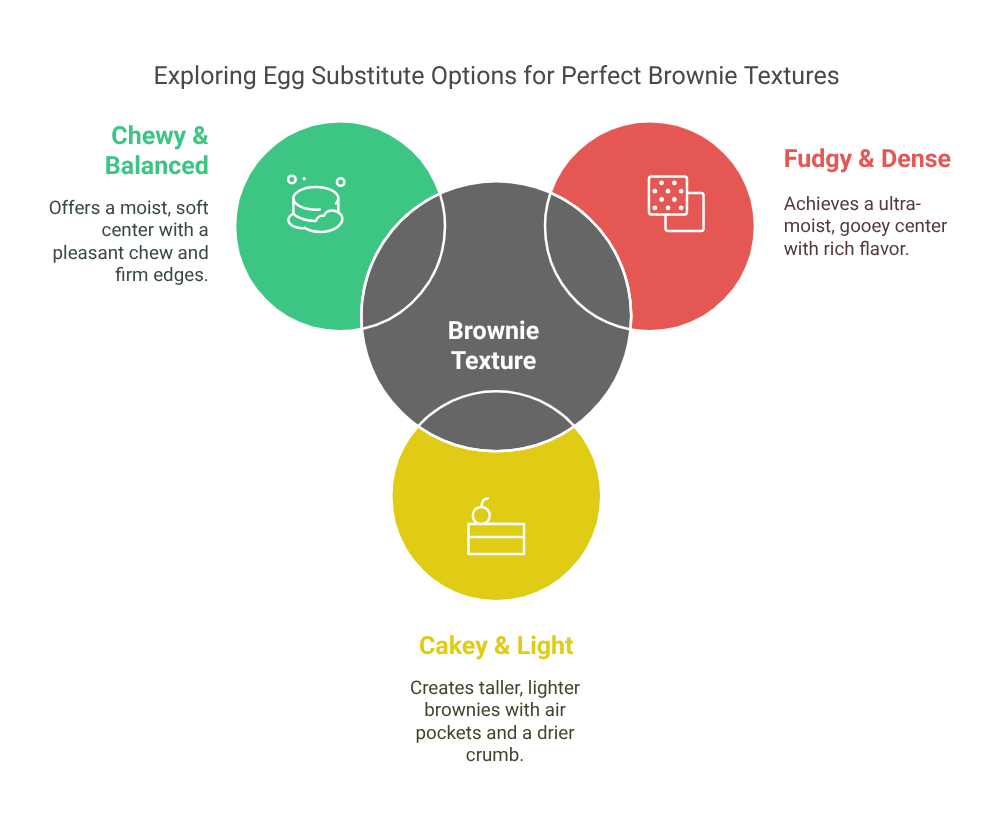
To summarize these recommendations, here’s a quick reference table:
| Brownie Texture | Ideal Egg Substitutes | Notes on Outcome |
|---|---|---|
| Fudgy & Dense | Flaxseed/Chia “egg”; Silken Tofu; Yogurt; Unsweetened Applesauce (with extra fat); Nut Butter | Ultra-moist, low rise, rich flavor. Little to no air, resulting in a gooey center and tight crumb. These keep brownies moist and prevent crumbling without puffing them up. |
| Cakey & Light | Baking Soda + Vinegar; Aquafaba (whipped); Commercial Egg Replacer (Bob’s, Ener-G, etc.) | Taller brownies with a lighter bite. More air pockets and a drier crumb (relative to fudgy brownies). They hold well and have a more cake-like structure. |
| Chewy & Balanced | Flax or Chia egg; Aquafaba (unwhipped or gently whipped); Yogurt + a pinch of baking soda; Combination of substitutes (e.g., flax + vinegar-soda) | Moist and soft in the center with a pleasant chew and slightly firm edges. Moderate density – not too heavy, not too airy. Good binding ensures a cohesive, chewy bite. |
Keep in mind that other factors in your recipe (like the amount of oil/butter, type of flour, and sugar ratio) also affect the texture. Egg substitutes are one piece of the puzzle. So, if your first attempt isn’t exactly the texture you want, you can adjust the substitute or other ingredients. For example, if a flax egg brownie is a bit too dense for you, try adding 1/4 teaspoon of baking powder next time; if an aquafaba brownie is too cakey, try using half aquafaba and half mashed banana for more richness.
With this knowledge, you’re ready to choose the right egg alternative for your needs. Finally, as promised, here’s an ultimate egg-free brownie recipe that puts these principles into practice for a guaranteed delicious result.
The Ultimate Egg-Free Brownie Recipe
After much testing in the kitchen, we’ve crafted a fudgy eggless brownies recipe that rivals any traditional one. This recipe uses a clever combination of substitutes to ensure the brownies are moist, well-bound, and have that crave-worthy chewy-fudgy texture. Get your apron on – let’s bake!
Ingredients
(Makes one 8×8-inch pan of brownies, about 16 brownies)
- 1/2 cup unsalted butter, melted and slightly cooled (or use vegan butter for a dairy-free option)
- 1/4 cup vegetable oil (adds extra moisture for fudginess)
- 1 1/4 cups granulated sugar
- 1/4 cup brown sugar (for a bit of extra chew and flavor)
- 1/4 cup plain full-fat yogurt (room temperature) – this is one part of our egg substitute combo, providing richness and binding
- 1/4 cup milk (room temperature) + 1 teaspoon white vinegar – combine to make a quick buttermilk. This is the second part of our egg substitute, to add moisture and a touch of lift. (Use dairy or non-dairy milk as you prefer.)
- 2 teaspoons vanilla extract (for flavor)
- 3/4 cup all-purpose flour (spooned and leveled)
- 1/2 cup unsweetened cocoa powder (natural or Dutch-process)
- 1/2 teaspoon baking powder (ensures the brownies aren’t too flat, giving just a slight lift)
- 1/2 teaspoon salt (balances sweetness and enhances chocolate flavor)
- 1/2 cup semisweet chocolate chips (optional, for extra gooey chocolate pockets)
Ingredient Notes: This recipe uses a yogurt + soured milk combination to replace 2 eggs. The yogurt adds protein and fat (like an egg yolk would), and the soured milk (buttermilk) adds liquid and a bit of leavening via its reaction with baking powder. Together, they emulate the eggs’ roles nicely. The mix of white and brown sugar helps achieve a shiny, crackly top and chewy texture (brown sugar has molasses which retains moisture). If you prefer, you can replace the yogurt with 1/4 cup silken tofu purée for a similar effect, and the milk+vinegar with 3 tablespoons aquafaba for a vegan version – the recipe is flexible. Just keep the overall ratios consistent.
Instructions
- Preheat and Prepare Pan: Preheat your oven to 350°F (175°C) (for slightly fudgier centers, you can go a bit lower at 325°F, but bake a little longer). Line an 8×8-inch square baking pan with parchment paper, or lightly grease it. Parchment is recommended for easy removal – leave some overhang “handles” on two sides.
- Mix the Wet Ingredients: In a large mixing bowl, combine the melted butter, oil, granulated sugar, and brown sugar. Whisk vigorously until the mixture looks smooth and shiny. (Pro Tip: Whisking the sugars with warm melted butter helps start dissolving the sugar, which can lead to that coveted crackly top on the brownies. You want the mixture to be well-combined – it may look a bit like a thick syrup.) Add the yogurt and whisk it in until completely incorporated. The mixture will thicken a bit as the yogurt blends in. Next, stir in the milk + vinegar mixture (your DIY buttermilk). It’s okay if the milk was curdled – that actually helps. Also add the vanilla extract at this point. Whisk everything together until you have a smooth, combined wet mixture. It may look slightly grainy (from sugar) and runny, which is normal.
- Combine Dry Ingredients: In a separate bowl, sift or whisk together the flour, cocoa powder, baking powder, and salt. Make sure there are no cocoa lumps and that the baking powder and salt are evenly distributed in the flour.
- Mix Dry into Wet: Gradually add the dry ingredient mixture to the wet ingredients bowl. Use a spatula or wooden spoon to fold the dry ingredients in gently. Do not overmix – stir just until you no longer see streaks of dry flour. The batter will be relatively thick. A few small lumps are okay; they will hydrate during baking. Overmixing develops gluten, which could make the brownies tough (and we want them tender and chewy).
- Add Chocolate Chips (Optional): If you’re using chocolate chips or other mix-ins (like chopped walnuts or pecans), fold them into the batter now. Distributing these in the batter gives nice melty chocolate bits or nutty crunch in the finished brownies.
- Bake: Spread the batter evenly into the prepared pan, smoothing the top with your spatula. Bake in the preheated oven for 30 to 35 minutes (if at 350°F). If you opted for a 325°F oven, bake for about 40 to 45 minutes. The brownies are done when the top is set and a toothpick inserted near the center comes out with a few moist crumbs, but not raw batter. You might also notice the edges of the brownies just begin to pull away from the pan sides. The top should look shiny and perhaps have tiny cracks. Baking Tip: Because this recipe is egg-free, it’s a little more forgiving on cook time than egg recipes (which can curdle if overcooked). However, to ensure a fudgy result, err on the side of slightly under-baking rather than over-baking. The center will firm up as the brownies cool. If the toothpick comes out completely clean, they may be on the drier side (more cake-like, still tasty though!). If you see raw wet batter on the toothpick, give it another 5 minutes and check again.
- Cool Completely: This is the hard part – once out of the oven, place the pan on a wire rack and let the brownies cool entirely in the pan. At minimum, let them cool for 1 hour, but 2 hours is better for very clean cuts. Cooling is crucial for eggless brownies; because they have a high moisture content, they really set their structure as they cool down). Cutting too early can result in a gooey mess that, while delicious, won’t hold its shape.
- Cut and Serve: Once cool, use the parchment overhang to lift the whole slab of brownies out of the pan. Transfer to a cutting board and use a sharp knife to cut into squares. For extra neat squares, wipe the knife blade clean between cuts. You should see a nice moist crumb and perhaps a glossy top on each brownie. Serve and enjoy! These brownies have a rich chocolate flavor and no one will guess they’re made without eggs.
Recipe Variations and Pro Tips:
- Make it Vegan: This recipe can be made fully vegan by using plant-based butter, nondairy yogurt, and nondairy milk. The result is virtually the same. You can also substitute the yogurt with 1/4 cup of mashed ripe banana or unsweetened applesauce for a vegan option – the brownies will be slightly softer and the banana will add flavor, but they remain deliciously chocolaty.
- Gluten-Free Option: Replace the all-purpose flour with a good 1:1 gluten-free baking flour blend. Eggless brownies actually adapt well to gluten-free flour since they’re meant to be fudgy (you’re not relying on gluten for structure as much). Just don’t overmix, as GF flours can sometimes thicken the batter more.
- Enhance the Chocolate: Add 1 teaspoon of instant espresso powder to the batter along with the cocoa. Coffee intensifies the chocolate flavor (a trick often used in brownie recipes). It won’t make the brownies taste like coffee, just more chocolaty.
- Shiny Crackly Top: Achieving a crackly top without eggs can be hit or miss, but here are some tips: Make sure to beat the sugar well into the butter/oil (as we did) – a good sugar dissolve is key. Using some brown sugar helps create a glossy top due to its higher moisture. Another trick is to sprinkle a handful of chocolate chips on top of the batter before baking; as they melt, they can create shiny puddles. Lastly, don’t overbake – a bit of underdone center often correlates with a shiny, crackled surface.
- Don’t Skip Cooling: As mentioned, cooling is crucial. If you try to eat or move the brownies while hot, they may seem undercooked or too soft. Patience will reward you with perfect texture. If you absolutely can’t wait, scoop some warm brownie into a bowl and top with ice cream for a brownie sundae – it’ll be messy but wonderful. But let the rest cool for proper brownies.
- Storage: Store these egg-free brownies in an airtight container at room temperature. They actually stay moist longer than egg-based brownies (eggs can dry out over days, whereas these have humectant ingredients like yogurt and brown sugar). They’ll keep well for about 3-4 days. You can also freeze them – wrap tightly and freeze for up to 2 months, then thaw at room temp. A quick 10-second microwave zap can make them taste freshly baked.
Enjoy your homemade, eggless, fudgy brownies! This recipe proves that you can make incredible brownies without eggs. The combination of yogurt and soured milk mimics the magic of eggs, yielding brownies that are moist, chewy, and deeply chocolatey. Serve them to your family or guests and we guarantee nobody will miss the eggs at all.
Summary
Baking brownies without eggs is not only possible, it’s downright delightful when you use the right substitutes. We’ve explored a range of egg alternatives – from flaxseed “eggs” that create superbly fudgy, chewy brownies to commercial replacers that ensure a reliable cake-like crumb. The best egg substitute for brownies ultimately depends on how you like your brownies: for ultra-fudgy brownies, moist binders like flax, yogurt, or silken tofu shine; for cakey brownies, fizzy leaveners or aquafaba do wonders; and for that perfect chewy middle ground, a balanced combo is king.
To recap, if you’re aiming for fudgy eggless brownies, you might reach for ground flaxseed or creamy yogurt to lock in moisture and density. If you prefer cakey brownies without eggs, a little baking soda and vinegar or a trusty product like Ener-G can give you a lighter lift. And if you want chewy, gooey brownies, consider aquafaba or a flax+aquafaba mix for structure and tenderness. Feel free to refer back to our comparison table as a quick guide when experimenting.
Don’t be afraid to experiment with these substitutes. Baking is a science, but it’s also an art – you may find you love the results of a applesauce–flax combo, or perhaps banana–aquafaba becomes your signature. The beautiful thing is, once you understand what eggs contribute, you can mix and match replacements to get that moisture, binding, and slight rise just right.
Rest assured, egg-free brownies can be every bit as delicious as their traditional counterparts. Many people who try an eggless brownie out of necessity (allergy, vegan diet, or the classic “out of eggs” scenario) end up surprised at how rich and satisfying the result is. In some cases, you might even prefer the egg-free version for its particular texture or flavor nuance!
We hope this guide has demystified the process of making brownies without eggs. Now, when someone asks, “Can you make brownies without eggs?” – you can confidently say “Yes, and they’re amazing!”. Whether you use a flax egg, a scoop of silken tofu, or a dash of baking chemistry, you have plenty of tools in your baking arsenal.
Happy baking, and enjoy your chocolaty, egg-free creations. If you loved this guide, be sure to check out more of our egg-free baking recipes – from cakes to cookies – and our recommendations for vegan baking products that can make your kitchen adventures easier. There’s a whole world of desserts to explore, even without eggs. Enjoy your brownies, and welcome to the egg-free baking club!


