Introduction
Eggs are a staple in many recipes, but there are plenty of reasons home cooks seek out substitutes. Some people have egg allergies or follow vegan diets, while others face egg shortages or high prices (recent bird flu outbreaks caused egg prices to soar to $4–$8 a dozen in some areas ). Dietary restrictions (like cholesterol concerns) and cost considerations can all motivate finding an egg alternative. Fortunately, cooking without eggs is entirely possible and can be just as delicious.
It’s important to note that eggs serve different functions in cooking vs. baking. In baking, eggs often provide structure, leavening, and moisture to cakes and breads. In savory cooking, eggs might appear as the main component (scrambled eggs, omelets) or as a supporting ingredient (binding a meatloaf, thickening a sauce). Eggs contribute structure, moisture, thickening, and emulsification to dishes, which is why they’re so versatile. For example, the fat in egg yolks adds moisture and richness while the proteins in whites coagulate to bind ingredients together when heated. Egg yolks also contain lecithin, a natural emulsifier that helps blend liquids like oil and water into a smooth mixture (think mayonnaise and hollandaise). In this guide, we’ll explore well-researched homemade and commercial egg substitutes that can replicate these roles in common egg-based savory dishes.
Whether you’re out of eggs or cooking for someone who can’t have them, this comprehensive guide will help you choose the right egg replacer. We’ll explain the science of how eggs function in cooking, then delve into the best homemade substitutes (from tofu to flaxseed) and top store-bought replacers (like JUST Egg and others). You’ll also find a handy comparison table by dish type and an easy recipe, plus pro tips for egg-free cooking that’s flavorful and satisfying. Let’s crack on with our egg substitute journey!
How Eggs Function in Cooking (The Science Behind It)
Understanding what eggs do in a recipe will help you pick the best substitute. Here are the key functions of eggs in savory cooking:
- Binding: Eggs act as edible glue. As egg proteins heat up and set, they bind ingredients together and give strength to foods like meatloaf, meatballs, veggie burgers, and fritters. This binding prevents these mixtures from falling apart during cooking.
- Moisture & Texture: Eggs add moisture and richness, which translates to tenderness in the final dish. The fat in yolks keeps dishes moist and tender, while the protein structure holds water. This is why scrambled eggs, omelets, or quiches made with eggs have a soft, creamy texture. In fact, eggs can hold up to four times their weight in moisture, helping prevent dryness . If you remove eggs, you’ll want a substitute that also contributes some liquid or fat for moisture.
- Thickening: When gently heated, eggs thicken mixtures due to protein coagulation. Custards, sauces like carbonara, and savory fillings (e.g. for quiche or pie) rely on eggs to become thick and set without curdling. Egg yolks begin to thicken around 144–158°F (62–70°C) as they cook, turning a liquid mixture into a creamy or firm gel. This property makes eggs valuable for thickening sauces, custards, and puddings.
- Emulsification: Egg yolks are rich in lecithin, a natural emulsifier that helps blend fats and water into a stable mixture. This is crucial for sauces and dressings like mayonnaise, hollandaise, and creamy salad dressings, where eggs keep the oil and vinegar or lemon juice from separating. An egg yolk’s lecithin molecule has a water-loving end and a fat-loving end, allowing it to bridge ingredients that normally don’t mix. The result is a smooth, velvety sauce.
In addition to these, eggs can also add color, flavor, and structure, but binding, moisture, thickening, and emulsifying are the main roles we focus on for cooking. Keeping these functions in mind will guide us in choosing the right substitute. Now, let’s explore the best homemade egg substitutes that can mimic these roles in your savory dishes.
Best Homemade Egg Substitutes for Cooking

When you need to replace eggs in a recipe, your pantry often holds the solution. Here are some of the top DIY egg substitutes and how to use them in savory cooking:
- Tofu (for Scrambles & Omelets): Tofu is a superstar in the egg-replacement world. Firm or extra-firm tofu works wonderfully for scrambles – just crumble it into a pan. It has a slightly firm yet creamy texture similar to cooked eggs, especially if you add a splash of liquid. For the best tofu scramble, use drained firm tofu and break it up in a skillet with a bit of oil. Add a few tablespoons of water or plant-based milk to help it achieve a softer, fluffy consistency, as well as seasonings like turmeric (for a yellow hue) and nutritional yeast for flavor. With the right spices (salt, pepper, and a pinch of black salt for eggy sulfur flavor), tofu can mimic scrambled eggs remarkably well. Silken tofu (the soft, custardy type) is ideal for dishes like omelets, quiches, or frittatas. Blended silken tofu creates a smooth, creamy base that sets when baked, much like eggs. In fact, silken tofu is an easy swap for eggs in vegan quiche recipes) – puree it with seasonings (and a little cornstarch or flour to help it firm up) and bake in a crust with veggies. Tofu has very little flavor on its own, so be sure to season it well (try soy sauce or mustard powder for depth, and kala namak for that classic egg taste). Whether you’re making a hearty breakfast scramble or a veggie-packed quiche, tofu is a reliable, protein-rich egg alternative.
- Chickpea Flour (for Omelets & Quiches): Chickpea flour (also known as garbanzo bean or besan flour) is a high-protein, gluten-free flour that magically turns into an “egg-y” batter when mixed with water. It’s perfect for vegan omelets or frittatas. When you combine chickpea flour with an equal part of water (often about 1/4 cup flour + 1/4 cup water per “egg”), maybe a pinch of baking powder, and spices, it forms a pourable batter. Cooked in a skillet like a pancake, this batter sets and holds together like an omelet that you can fill with veggies. Chickpea flour is an ideal egg substitute in vegan cooking, creating a fluffy texture similar to a traditional omelet when cooked. It’s very versatile: add a bit of turmeric for color, nutritional yeast or garlic powder for flavor, and let the mixture rest for a few minutes to hydrate. You can also use a chickpea flour batter to make a crustless quiche or farinata – bake it with vegetables until it solidifies into a sliceable pie. The key is getting the consistency right: not too thin. Many home cooks find that adding 1/8 teaspoon of baking powder and even a teaspoon of apple cider vinegar to the batter lightens it up, creating an even fluffier, tender omelet. Chickpea flour omelets are a game-changer if you can’t eat eggs – they’re filling, flavorful, and packed with protein.
- Aquafaba (for Binding & Lightness): Aquafaba is the culinary name for the liquid from a can of chickpeas (or the cooking liquid from beans). It might look like murky water, but it’s a remarkable egg substitute, especially for egg whites. The proteins and starches in aquafaba allow it to mimic many of egg white’s properties. For example, 3 tablespoons of aquafaba can replace 1 whole egg in many recipes. Aquafaba shines as an emulsifier and leavener: you can whip it into stiff peaks to create meringues or foams, and use it to add airiness to batters (like tempura or pancakes) for a lighter texture. In savory cooking, one of its star uses is vegan mayonnaise – aquafaba provides protein to emulsify oil and water into a creamy mayo without any egg. It’s also great for binding mixtures like veggie burgers or fritters when used in smaller amounts (a few tablespoons act similarly to egg whites to hold things together). Aquafaba has little to no taste, so it won’t alter the flavor of your dish. To use aquafaba, simply drain the liquid from a can of low-sodium chickpeas. For emulsions like mayo or dressings, whip or blend it with your other ingredients (mustard, vinegar, oil) and watch it thicken up into a stable sauce. For binding, you can stir it directly into your mixture. Aquafaba is low-cost (it’s essentially free if you’re using canned beans) and surprisingly effective – a true secret weapon for egg-free cooking.
- Mashed Potatoes (for Binding): Believe it or not, plain mashed potatoes (or even instant mashed potato flakes reconstituted with water) can step in for eggs as a binder in many savory recipes. Starchy potatoes are excellent at holding ingredients together without adding a strong flavor. For instance, adding about 1/4 cup of mashed potatoes to a pound of ground meat or vegetables can bind a mixture in place of one egg. Mashed potatoes work especially well in meatloaf, meatballs, and veggie patties. They help prevent dryness, too. Eggs in meat mixtures can sometimes make the texture spongy or if overdone, watery – whereas mashed potatoes keep the mixture moist without turning soggy. In fact, some chefs find that mashed potatoes are even more effective than eggs at yielding tender, non-crumbly meatballs. To use this substitute, take unseasoned mashed potatoes (just potato, and perhaps a pinch of salt; avoid added butter or milk if you want a neutral binder) and mix it into your patty or loaf mixture. About 1/4 cup per egg is a general guideline . The potato’s starch gels as it cooks, locking everything in place. This trick is also useful for those who need an allergen-friendly binder (mashed potatoes are gluten-free, soy-free, etc. if prepared simply). So next time you have some leftover mashed potatoes, you can repurpose them to help form your burgers or fritters!
- Ground Flaxseed or Chia Seeds (for Binding): Ground flaxseeds and chia seeds are classic egg replacers, often used in vegan baking, but they work in cooking too, particularly as binders. When mixed with water, these seeds form a gelatinous mixture often called a “flax egg” or “chia egg.” The standard formula is 1 tablespoon of ground flax (or chia seeds) + 3 tablespoons of water = 1 egg. Let it sit for about 5–10 minutes, and it thickens into a gel. This gel helps hold ingredients together because of its fiber content and viscosity. Flax or chia “eggs” are perfect for things like veggie burgers, lentil loaves, casseroles, or even breading for cutlets. They don’t mimic the fluffy texture of scrambled eggs (so you wouldn’t make flaxseed scrambles), but as a binder in mixtures they do the job well.
Flaxseed has a slight nutty flavor, so it pairs nicely in grain- or bean-based dishes. Chia is more neutral but can be grainy if not ground, so use ground white chia for a smoother result. One pro tip: use warm water to mix with flax; it helps the gelling happen faster. By the time you prep other ingredients, your flax “egg” will be ready to stir in. Because flax and chia create a gelatinous texture similar to egg whites, they’re excellent at providing structure and moisture in dishes (for example, helping a breadcrumb coating stick or keeping a meatless patty from crumbling). They’re also nutritious – packed with omega-3s and fiber – so you boost the health profile of your dish while replacing eggs. - Cornstarch or Arrowroot Powder (for Thickening): If your recipe relies on eggs primarily to thicken a sauce or custard, a pure starch like cornstarch or arrowroot can be a great substitute. These powders have strong gelling power when heated with liquid. For instance, a traditional quiche or custard uses eggs to thicken into a firm filling; you can replicate that by using a combination of plant milk, cornstarch, and perhaps a bit of silken tofu or flour for body. Cornstarch is often used in classic custards and pie fillings (even alongside eggs) to enhance thickening. In an egg-free context, cornstarch can replace the thickening action of egg yolks entirely. It creates a silky, slightly firm gel when cooked, very much like the texture of an egg-thickened custard. Arrowroot powder behaves similarly and can be used in place of cornstarch in equal amounts; it’s especially good if you want a shiny, clear sauce or if you’ll be freezing the dish (arrowroot doesn’t break down as easily upon freezing). To use these, mix 1 tablespoon of cornstarch or arrowroot with a small amount of cold water (this is your slurry) for each egg you’re replacing (or per cup of liquid in a sauce). Then stir it into your dish and heat until it thickens and bubbles. This works for savory custards (like a vegan quiche filling), puddings, creamy soups, or sauces like a gravy or even a mock hollandaise. (In a quick vegan hollandaise, for example, you might use a pinch of cornstarch to give the sauce a custardy thickness in lieu of egg yolks.) Keep in mind that pure starch won’t add the same richness as an egg yolk, so you might add a bit of vegan butter or cream for richness if needed. But for pure thickening power, these starches are reliable. They create that smooth, custard-like texture without any egg.
- Nut Butters (for Binding in Savory Dishes): Using nut butter as an egg substitute might sound odd at first, but think about the consistency of peanut butter or almond butter – thick, sticky, and dense. Those characteristics can help bind ingredients in certain savory recipes. For example, a spoonful of peanut butter can help hold together a batch of veggie burgers or seed-and-nut meatballs, while also adding a bit of protein and fat. Peanut butter and other nut butters have been used as egg replacers because they have some emulsifying properties (similar to egg yolk) and they lend moisture and cohesion to a mix . They work best in recipes where their flavor complements the dish: peanut butter is great in an Asian-inspired patty with ginger or a spicy black bean burger, whereas almond or cashew butter has a milder taste that can disappear into Italian or American-seasoned foods. Use about 1–2 tablespoons of nut butter to replace one egg when binding, mixing it thoroughly into the batter or dough. You may need to adjust seasoning to account for the nutty taste. One tip is to slightly dilute the nut butter first with a teaspoon of water or oil to make it easier to incorporate (since it’s quite thick). According to vegan cooking experts, peanut butter works well as a binder in burgers, especially with bold flavors that meld with peanut. It not only holds everything together but can also help with browning and adds a subtle richness. So next time you’re grilling veggie burgers and need an egg alternative, reach for that jar of nut butter. (And if you have a nut allergy, seed butters like tahini or sunflower seed butter can play a similar role!)
These homemade substitutes cover a wide range of uses. You might even combine two substitutes for better results – for example, some recipes use flaxseed plus mashed potato for extra binding, or silken tofu plus cornstarch for a quiche filling. The goal is to replace the specific function of egg in the recipe: whether it’s to bind, moisten, thicken, or emulsify. Now that we’ve covered DIY options, let’s look at some commercial egg replacers that are designed to simplify egg-free cooking.
Best Commercial Egg Replacers for Cooking
If you prefer a ready-made solution, there are several store-bought egg replacers on the market. These products are formulated to mimic eggs and often come with instructions for how to use them. Here are some of the top commercial egg substitutes and their best uses:
- JUST Egg: This is a liquid plant-based egg substitute that comes in a bottle, ready to pour. Made primarily from mung bean protein, JUST Egg looks like liquid eggs and cooks up very much like scrambled eggs or an omelet. It has been a game-changer in the vegan world – the liquid is excellent for scrambles, omelets, or even French toast. You can use it anywhere you’d use beaten eggs: pour it into a skillet to make soft scrambled “eggs”, or into a pie crust with veggies to bake a quiche. It firms up and even browns slightly like real egg. The flavor is mild (they add turmeric and carrot for color, and a bit of onion for savoriness), so it takes on seasonings well. Many people enjoy JUST Egg for convenience; there’s no mixing or blending required. Just shake the bottle and use. It’s sold refrigerated and has a similar protein content to eggs (5g protein per serving) but with zero cholesterol. If you’re looking for the closest experience to real scrambled eggs, this is a top choice. (Do note, JUST Egg is best for direct egg dishes like scrambles or omelets – it can be used in baking, but it’s a pricey option for that purpose.)
- Follow Your Heart VeganEgg: The VeganEgg from Follow Your Heart was one of the first commercial vegan egg products that could scramble like an egg. It comes as a powdered mix in a small egg carton. You blend the powder with cold water (usually 2 Tbsp powder to 1/2 cup water per “egg”) and then use that liquid in your cooking. The VeganEgg is very versatile – it’s a 100% plant-based egg replacer that you can use in baking or cook up as scrambled “eggs,” omelets, or quiches. It provides structure, a bit of leavening, and moisture, much like eggs do. The texture when cooked is impressively egg-like (more like a soft scrambled egg). It’s made from algal flour and protein, which gives it an eggy color and some umami flavor. This product is great for recipes like breakfast scrambles, quiches, or even french toast batter. It was designed to mimic eggs closely, so it even has a faint sulfurous “eggy” aroma from the algal ingredients. VeganEgg is gluten-free and soy-free, so it’s a good option for those with allergies who still want something eggy. Keep in mind it’s a specialty item (a bit harder to find now and somewhat pricey per “egg”), but it’s quite fun to cook with. If you’re craving an omelet that holds together or a classic quiche Lorraine but egg-free, this replacer can deliver. (As a bonus, its packaging is biodegradable and eco-friendly, aligning with the sustainable ethos of plant-based products.)
- Bob’s Red Mill Egg Replacer: Bob’s Red Mill (the popular whole-grain foods brand) makes a powdered egg replacer that’s a blend of potato starch, tapioca flour, baking soda and psyllium husk (for fiber). It’s one of the easiest brands to find in stores and very simple to use – you just mix it with water and let it sit a minute to thicken, then add to your recipe. Bob’s Red Mill Egg Replacer is unflavored and works especially well as a binder and leavening agent in baking, but it’s also useful in savory cooking. For example, you can use it to bind meatloaf or veggie loaf mixtures, coat foods for frying, or even to thicken a casserole or sauce. Chefs note that this replacer works for binding, breading or frying just as it does for baking. Essentially, it replaces the structure that eggs would provide. To replace one egg, you mix 1 tablespoon of the powder with 2 tablespoons of water (check the package for instructions, but it’s usually around that ratio). Because it contains baking soda and acid (usually cream of tartar), it will also give a little lift (rise) to your recipe. So for things like breadcrumb coatings or batters, it helps them crisp up. And in patties or loaves, it firms them. This product is a fantastic all-purpose egg replacer to keep on hand, especially if you frequently run out of eggs. It’s vegan and gluten-free, and one package can stretch to replace dozens of eggs.
- Ener-G Egg Replacer: Ener-G is a long-standing product (one of the originals in the vegan market) that is also a powder you mix with water. It’s made from a blend of starches (potato, tapioca) and some leavening agents. Ener-G is primarily used in baking and dessert recipes, but it’s also effective for thickening and binding in savory cooking. It doesn’t have any added flavor, so it won’t make your food taste funny. One notable aspect is how economical it is: a single 16 oz box can make the equivalent of about 100 eggs! To use Ener-G, you typically mix 1 1/2 teaspoons of the powder with 2 tablespoons of warm water to replace one egg. Stir until it’s well combined (it will look a bit like egg whites when mixed). Then add it to your recipe. In cooking, you can use Ener-G in things like veggie meatballs, casseroles, or even to help thicken a custard or sauce. It’s a great binding agent. For instance, if you’re making crab cakes or croquettes and the mixture is too loose without egg, a dose of Ener-G replacer can save the day. It firms up upon heating just like an egg would. Since it contains leavening, it can also help make a batter or dough a bit lighter. Think of it as a convenient powder that covers the basic structural duties of an egg. Ener-G is free from eggs, gluten, wheat, casein, dairy, yeast, soy, and nuts, making it very allergy-friendly. It’s flavor-neutral and particularly useful if you also need a long shelf-life product (unlike liquid egg replacers, the powder can sit in your pantry for months).
- Orgran No Egg: Orgran is an Australian brand known for gluten-free products, and their “No Egg” egg replacer is another powdered option. It’s quite similar in use to Ener-G or Bob’s, made from potato starch, tapioca starch, and a few other vegetable gums to simulate the texture of egg. Orgran’s No Egg lets you create baked goods with a texture close to those made with eggs and it boasts the equivalent of about 66 eggs per package). Like the others, you mix it with water (generally 1 teaspoon replacer + 2 tablespoons water per egg, but check their instructions). It is very versatile in cooking: you can use Orgran to bind ingredients in savory pies, veggie patties, or to thicken sauces and gravies. It’s also often used for things like batter for frying (mix the powder with water and use it to dredge foods before coating in breadcrumbs). One standout feature of Orgran No Egg is that it’s free from most common allergens – no gluten, no soy, no dairy, no eggs, no nuts, etc., which gives peace of mind if you’re cooking for someone with multiple allergies. In terms of performance, it’s a solid general egg replacer. It may not scramble into an omelet (powder replacers usually don’t – they’re more for binding/thickening), but if you need an egg’s function in a recipe without using an actual egg, Orgran will do the trick. Many people use it interchangeably with Ener-G or Bob’s, depending on which brand they have access to.
Other brands and products exist (like Just Egg Folded, a pre-cooked patty for breakfast sandwiches, or newer innovations like Zero Egg and Simply Eggless liquids), but the ones above are among the most popular and widely available. Each has its strengths, so you might choose one over another based on what you’re cooking.
Now that we have a lineup of options, how do you decide which substitute to use for which recipe? The choice will depend on what you’re making. Let’s break it down by dish type.
Choosing the Right Egg Substitute for Your Dish
Different substitutes shine in different applications. Here’s a quick guide (and a handy comparison table) to help you pick the best egg replacer for your specific dish:
- For Scrambled Eggs & Omelets: You’ll want a substitute that can create a fluffy, cohesive texture and carry savory flavors. The top choices here are JUST Egg, which is tailor-made for scrambles/omelets, or tofu for a more whole-food approach. JUST Egg cooks just like real beaten eggs and yields a very authentic scramble. Tofu (firm for scramble, silken for omelet) is excellent when seasoned well – it delivers on protein and fluffiness (especially with a pinch of turmeric and black salt for eggy color and taste). A chickpea flour batter is also fantastic for omelets or even a scramble-style dish; it forms a sort of pancake that can mimic an omelet’s texture. If you’re aiming for a classic diner-style omelet without eggs, try a chickpea flour base or the VeganEgg powder, which was designed for omelets. In summary, liquid vegan eggs or tofu are your go-tos for replicating scrambled eggs, while chickpea flour or VeganEgg works for omelets and crepes.
- For Quiches & Frittatas: These dishes need a custard-like filling that sets firm. Silken tofu is one of the best substitutes for the egg filling in quiche – when blended smooth (often with a bit of non-dairy milk, cornstarch, and seasoning) it bakes into a rich, firm filling that slices nicely. It has a neutral taste, so you can flavor it to match a quiche (with garlic, nutritional yeast, veggies, etc.). Chickpea flour batter can also be used for a frittata or quiche; some recipes combine chickpea flour with tofu for extra structure. A bit of cornstarch or arrowroot added to these mixtures helps replicate the dense custardy set that eggs give . JUST Egg is also an option for quiche or frittata – you can mix in veggies and bake it, as it will solidify when heated (similar to how it works in a scramble). If using a commercial powder like Bob’s or Orgran in a quiche, you’d likely use it alongside something like silken tofu to get the right consistency (the powder alone would thicken but not give the full custard feel). So for a stellar egg-free quiche: go with silken tofu + a starch, or use a chickpea flour base. For frittatas: a hearty chickpea batter with lots of veggies and a bit of baking powder to lighten it works wonders.
- For Meatloaf, Burgers, & Patties: Binding is the main concern here – you want your loaf or patty to hold together when sliced or bitten, and not be too dry or too wet. The best substitutes in these cases are often flax or chia “eggs,” mashed potatoes, or a commercial powder like Bob’s Red Mill. A flax egg adds moisture and binding, helping stick your ingredients (be it lentils, beans, veggies, or meat) together. Mashed potato (as discussed) is excellent for keeping a loaf tender and intact – it gives that nice cohesive slice. If you have a box of egg replacer powder (Bob’s, Ener-G, Orgran), those are practically made for this scenario: just mix the recommended amount for one or two eggs and incorporate; they will gelatinize and bind the mixture once cooked. Nut butters can also be an interesting binder for patties – for example, a black bean burger with a tablespoon of peanut butter not only sticks together better but has an improved savory flavor. Just be mindful of the flavor additions. In summary, for hearty mixtures like loaves and burgers: flaxseed/chia or starch-based replacers are ideal to hold everything together, and mashed potato is a great secret trick for an egg-free binder that keeps things moist.
- For Sauces & Dressings: When making things like mayonnaise, aioli, hollandaise, or creamy dressings sans egg, think about emulsification and thickness. Aquafaba is a star in this category – it can replace raw egg yolks in mayonnaise by emulsifying oil and vinegar into a stable creamy spread. In fact, aquafaba mayo is so convincing, you might not tell it apart from regular mayo. For hollandaise sauce (which is traditionally egg-thickened butter sauce), you can use a combination of a starchy thickener and a creamy base: for example, a bit of cornstarch for thickness and perhaps cashew cream or vegan butter for richness, plus a touch of turmeric for color and kala namak for the eggy sulfur note. If you need to replace egg as an emulsifier in a salad dressing (like Caesar dressing which uses egg yolk), you can use a dab of Dijon mustard (another emulsifier) along with a teaspoon of aquafaba to hold it together. Silken tofu blended until smooth can also create a creamy base for dressings (like a ranch or blue cheese style dressing) and sauces, eliminating the need for egg yolk emulsions. Essentially, for sauces and dressings: use aquafaba for mayo or any eggy cold sauce, and use starches or blended tofu for warm sauces to get thickness. A commercial product like JUST Egg isn’t used in sauces, and powders like Orgran won’t emulsify, so stick to natural emulsifiers like aquafaba or mustard in those cases.
To make this easier, here’s a quick reference table summarizing which substitutes work best for various dishes:
| Dish Type | Best Egg Substitutes |
|---|---|
| Scrambled Eggs & Omelets | – JUST Egg (liquid vegan egg) – for authentic scrambles/omelets- Tofu (firm) – crumbled for scramble; Tofu (silken) – blended for omelet- Chickpea Flour Batter – cooks into a fluffy omelet or scramble-like dish |
| Quiches & Frittatas | – Silken Tofu (blended) – creates a custard-like quiche filling- Chickpea Flour (with water) – sets into a frittata when baked- Cornstarch or Arrowroot – added to thicken and set the filling (often used with tofu or plant milk) |
| Meatloaf, Burgers & Patties | – Flax or Chia “Egg” – gel-like binder to hold mixtures together- Mashed Potatoes – 1/4 cup can replace 1 egg as a binder (Forget The Eggs, Mashed Potatoes Are The Perfect Way To Bind Meatballs), keeps texture moist- Commercial Egg Replacer Powder (e.g. Bob’s Red Mill, Ener-G) – binds and provides structure when mixed in |
| Sauces & Dressings | – Aquafaba – whips and emulsifies for mayo, aioli, dressings (3 Tbsp replaces 1 egg)- Cornstarch Slurry – thickens sauces like hollandaise or custard sauces when heated- Silken Tofu – blended into creamy dressings or sauces (for thickness and body in place of egg yolks) |
(Table: Recommended egg substitutes by dish type for easy reference.)
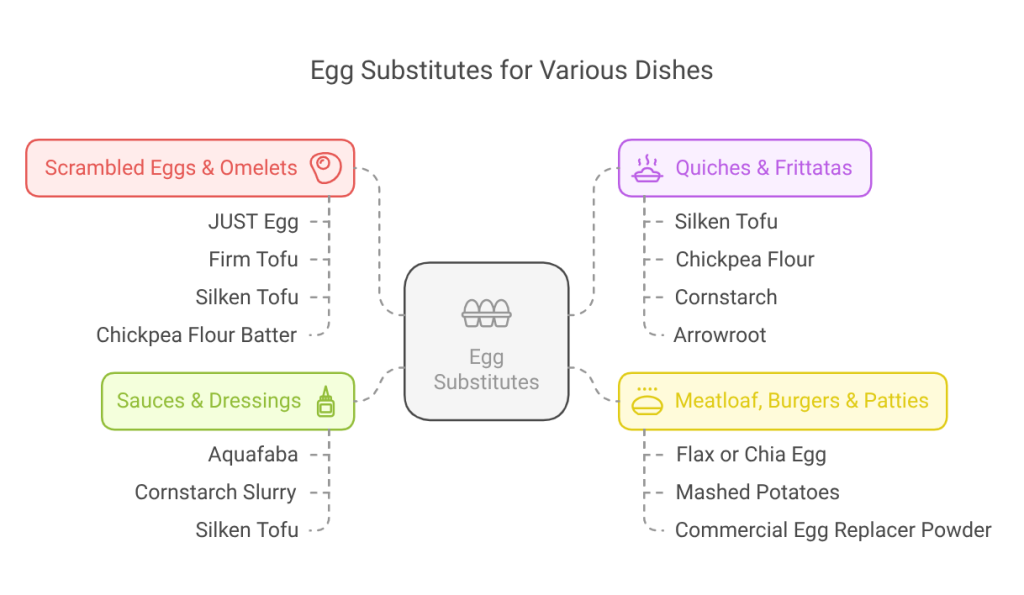
Using this table, you can mix and match based on what you have. For example, if you’re making a vegan quiche without eggs, you might see that silken tofu plus a little cornstarch (and perhaps a spoon of chickpea flour) will give you the best result – and indeed many egg-free quiche recipes use exactly that combination. If you want an egg substitute for scrambled eggs, you’ll spot that tofu or JUST Egg are excellent choices, and you can be confident diving into that tofu scramble.
Now that you have an idea of which substitute suits which dish, let’s put some into practice and discuss tips for cooking without eggs.
Egg-Free Cooking Guide (Recipes & Tips)
Cooking without eggs may require a few new techniques, but it’s quite easy once you get the hang of it. In this section, we’ll walk through an easy egg-free scrambled “egg” recipe and share some pro tips on maintaining flavor and texture in eggless cooking.
Easy Egg-Free Scrambled “Eggs” (Tofu Scramble Recipe)
Scrambled eggs are a breakfast favorite. Here’s how you can make a delicious, protein-packed tofu scramble that rivals the real thing.
Ingredients (Serves 2):
- 1 block (14 oz) firm tofu, drained
- 2 tablespoons olive oil (or vegan butter)
- 2 tablespoons water or plant-based milk (for moisture)
- 1/2 teaspoon turmeric (for color)
- 3 tablespoons nutritional yeast (for savory, “cheesy” flavor)
- 1/2 teaspoon garlic powder (optional, for flavor)
- 1/2 teaspoon onion powder (optional)
- 1/4 teaspoon black salt (kala namak) (for eggy flavor; or use regular salt to taste)
- 1/4 teaspoon ground black pepper (to taste)
- Chopped veggies of choice (such as onions, peppers, spinach) – optional
Instructions:
- Prep the Tofu: Pat the tofu dry with paper towels. You don’t need to press it extensively for scramble – a bit of moisture is okay. Using your hands or a fork, crumble the tofu into bite-sized pieces. Aim for an uneven texture (some smaller crumbles, some bigger pieces) to mimic the curds of scrambled eggs.
- Season the Tofu: In a bowl, toss the crumbled tofu with turmeric, nutritional yeast, garlic powder, onion powder, black salt, and pepper. The turmeric will give a yellow hue like egg yolk, and black salt provides a subtle sulfurous aroma that tastes like eggs. Nutritional yeast adds umami depth. Mix so the spices coat the tofu evenly.
- Sauté (with Veggies if using): Heat the olive oil or vegan butter in a non-stick skillet over medium heat. If you want to include chopped veggies (like diced onion, bell pepper, or mushrooms), add them to the pan and sauté for a few minutes until softened. Then, add the seasoned tofu crumbles to the pan.
- Cook the Scramble: Sauté the tofu in the pan, stirring occasionally. It will initially release some water (especially if the tofu wasn’t pressed dry, which is fine). Cook for about 5–7 minutes. As it cooks, the tofu will firm up a bit and brown slightly in spots. If the mixture looks a little dry or you want it creamier, pour in a tablespoon or two of water or plant milk and stir – this helps create a soft, fluffy texture reminiscent of softly scrambled eggs.
- Taste and Adjust: Give it a taste and adjust the seasoning. Add more black salt or regular salt if it needs a stronger “egg” flavor, or a pinch more nutritional yeast for cheesiness. If you like a richer scramble, you can stir in an extra teaspoon of vegan butter at the end to melt through.
- Serve: Once heated through and lightly browned, remove from heat. Garnish with chopped chives or parsley if desired. Serve your tofu scramble hot, with toast or as part of a hearty breakfast plate. Enjoy the eggy goodness – no eggs needed!
This simple recipe shows how combining tofu + seasonings can yield a very egg-like dish. You can customize it endlessly: add cumin and chili for a southwest scramble, toss in spinach and dairy-free cheese for something like scrambled eggs Florentine, etc.
Cooking Tips: One secret ingredient used in many egg-free scramble recipes is kala namak, or Indian black salt. We used it above – it has a high sulfur content which gives a distinct hard-boiled egg aroma. A little goes a long way, but it truly makes the tofu taste and smell like eggs. If you don’t have it, regular salt is fine, but consider getting some for your egg-free pantry (it’s commonly available in spice shops or online).
Tips for Cooking Without Eggs (Flavor & Texture)
Now, beyond this recipe, let’s talk general tips for egg-free cooking to help maintain flavor and texture:
- Use the Right Seasonings: Eggs have a subtle flavor, slightly sulfurous and rich. To replicate that, seasoning is key. As mentioned, black salt (kala namak) provides an eggy aroma and is fantastic in scrambles, omelets, or eggless salads (like vegan egg salad made from tofu). Nutritional yeast adds a depth of flavor that can prevent eggless dishes from tasting bland – it gives a savory, cheese-like note that works well in scrambles, quiches, and sauces. Turmeric is mostly for the golden color (and a bit of earthiness); just a pinch will do to avoid turning the flavor bitter. Herbs and spices that you might use with eggs (chives, dill, parsley, paprika) should still be used liberally so your dish looks and tastes familiar. Essentially, don’t be shy with seasoning when you remove eggs, as you want to build layers of flavor.
- Mind the Moisture: One challenge when omitting eggs is that some substitutes can lead to a drier result if you’re not careful. Eggs contain water and fat which impart moisture. So if you’re using something like flaxseed (which is all fiber) or a starchy powder, make sure the overall moisture in the recipe is sufficient. In a meatloaf without eggs, for example, adding a little extra ketchup or plant milk can keep it from getting too dense. Our tofu scramble recipe added a splash of water to keep it supple. When baking, many commercial egg replacers note you might want to slightly increase liquids or fats to compensate for the lost moisture of eggs. Keep an eye on texture – if a batter or mix feels too stiff, mix in a tablespoon of water or oil at a time until it resembles the consistency it would have with egg. This prevents dryness in the final dish.
- Avoid Gumminess: Some substitutes, particularly starches and ground seeds, can become gummy if overused. For instance, too much flaxseed in a recipe can make it slimy, and too much cornstarch can make a pudding rubbery. Stick to proven ratios (like 1 Tbsp flax to 3 Tbsp water per egg, or about 1–2 Tbsp starch per cup of liquid for thickening). Also, pay attention to cooking times and temperatures. Eggless custards with cornstarch should be cooked gently and just until set – overcooking can make them too firm. When working with chickpea flour, let the batter rest 10–15 minutes before cooking so it hydrates fully (this prevents a raw bean taste and improves texture), and cook it through on medium heat – undercooking can leave it gummy, but proper cooking yields a nice bite. Basically, moderation is key with the gelling substitutes.
- Combine Substitutes if Needed: Don’t hesitate to use two different egg replacers in tandem. Many vegan recipes do this to capitalize on the strengths of each. For example, in a quiche, you might use silken tofu for creaminess and a tablespoon of chickpea flour or cornstarch for firmness. In a cake or fritter, you might use a flax egg for binding plus a bit of baking powder for leavening (since eggs would have done both). If you find your first attempt at a recipe without eggs is a bit crumbly, next time try adding a second binder (e.g., if you only used flax, add a spoon of starch as well). Through a bit of trial and error, you’ll discover the perfect mix.
- Don’t Overcook Substitutes: Egg proteins coagulate and set within a certain temperature range (as noted earlier, yolks set around 158°F). Many substitutes don’t tolerate high heat or overcooking as well – they can either dry out or break down. For instance, aquafaba foam will collapse if cooked too long, and tofu can become tough if you cook it to death. So, cook egg-free dishes just until done. A tofu scramble only needs 5-7 minutes on the stove; a chickpea flour omelet should be taken off heat once it’s solid and lightly browned (overcooking can harden it). Custards with starch should be taken off the heat as soon as they thicken and then allowed to cool to set fully. By avoiding excessive cooking, you’ll get better textures (no rubbery or overly dry results).
- Add Richness and Color: If a dish is falling a little flat without eggs, consider what eggs would have contributed and try to replace that. For richness, add a bit more healthy fat – a drizzle of olive oil or a pat of vegan butter can replicate the luxurious mouthfeel of egg yolk. For color, as mentioned, turmeric or even a tiny bit of curry powder can give a yellow tint. In baking or sauces, a pinch of ground annatto or saffron can also add golden color naturally. For shine (like an egg wash on pastries), you can brush plant-based milk or aquafaba on top to encourage browning. Little tweaks like these will make your egg-free dishes look appealing and taste satisfying.
- Experiment and Taste as You Go: Egg-free cooking is a learning process. Don’t be afraid to experiment with these suggestions. Taste your mixtures before cooking when safe to do so (obviously not raw meat, but doughs, batters, and tofu mixes can be tasted). Adjust the seasoning if something seems bland. If you’re trying a new commercial replacer, maybe cook a small test patty or a spoonful of batter to see how it holds and tastes, then adjust the mix if needed (for example, more binder or more liquid). Over time, you’ll get a feel for which substitutes you personally prefer. Some people love the simplicity of flax eggs, others prefer the neutrality of powdered replacers, and others go straight for whole-food tofu or chickpea solutions. All are valid – it often comes down to personal taste and nutritional preference.
By keeping these tips in mind, you’ll maintain the flavor and texture in your cooking even without eggs. In fact, many egg-free recipes are so good that your family or guests might not even notice the difference until you tell them.
Summary
Cooking without eggs is not only possible, it can be downright enjoyable with the right know-how. We’ve explored the best substitutes based on the role eggs play in various dishes. To recap:
- For binding needs (like in meatloaf, burgers, fritters), go for flax/chia “eggs”, mashed potatoes, or a reliable commercial binder (Bob’s Red Mill, Ener-G, Orgran). They will hold your ingredients together (Forget The Eggs, Mashed Potatoes Are The Perfect Way To Bind Meatballs) and keep the texture on point.
- For moisture and fluffiness in scrambles and omelets, tofu and JUST Egg are superb, while a chickpea flour omelet batter gives you that soft yet structured result (Easy Vegan Omelette with Chickpea Flour Recipe | Essy Cooks) – don’t forget the seasonings for authentic flavor.
- For thickening sauces or custards, cornstarch or arrowroot can step in for egg yolks (Vegan Custard – A Virtual Vegan), and silken tofu can add creamy thickness too. Aquafaba works wonders for emulsifying dressings and mayo, replacing eggs in those silky sauces (Easy Vegan Mayonnaise (With Aquafaba) Recipe).
- For emulsification (mayo, hollandaise), aquafaba is almost magical, creating stable emulsions as an egg yolk would, and mustard or soy lecithin can assist as well if needed.
Don’t be afraid to mix and match substitutes to get the best outcome – cooking is an art as well as a science. The key is understanding what function the egg was serving and choosing a replacement that provides a similar structure or flavor profile.
Egg-free cooking can absolutely be just as flavorful, rich, and satisfying as cooking with eggs. In many cases, you might even discover new textures or flavors you prefer. Plus, these alternatives often add nutritional benefits like extra fiber (flax/chia) or lower cholesterol (plant-based options have zero cholesterol by default).
We encourage you to experiment in your kitchen with these substitutes. Try that tofu scramble or whip up a batch of aquafaba mayo. Make a vegan quiche for brunch and wow your friends. As you saw, there’s a whole world of creative alternatives, from homemade tricks to innovative store-bought products, making it easier than ever to cook without eggs.
Egg-free cooking is an opportunity to get creative and it’s friendly for those with dietary restrictions. With this comprehensive guide, you’re well-equipped to handle any recipe that calls for eggs – no eggs required! So next time you’re in the kitchen and realize you’re out of eggs (or you’re cooking for someone who doesn’t eat them), you’ll know exactly what to do.
Happy cooking, and enjoy the egg-free adventures ahead. And if you’re looking for more inspiration, be sure to check out our site for additional egg-free recipes and product recommendations – a delicious world beyond eggs awaits. Bon appétit!


