Introduction
Home bakers are increasingly exploring egg substitutes for baking, and it’s easy to see why. Some are dealing with egg allergies or embracing a vegan diet, while others simply face egg shortages or high prices and need alternatives. (In fact, eggs are one of the most common food allergens, affecting up to 2% of children.) Additionally, plant-based eating is on the rise – over 9.7 million Americans now identify as vegan, about 6% of U.S. consumers – so the demand for baking without eggs has never been higher. Even during egg shortages or price spikes (like during the 2023 bird flu outbreak), many turned to creative replacements.
But can you really bake without eggs and still get delicious results? Absolutely. To do it successfully, it’s important to understand the role of eggs in baking and how to mimic their effects. Eggs are incredibly versatile: they bind ingredients, provide moisture and richness, help baked goods rise, and even emulsify fats with liquids for a smooth batter. This ultimate guide will walk you through the science behind eggs in baking, the best homemade and commercial egg replacers, and how to choose the right substitute for cookies, cakes, muffins, pancakes, and even meringues. We’ll even include an easy recipe and pro tips, all in a warm, Martha Stewart-approved tone. By the end, you’ll know exactly how to bake without eggs while achieving wonderful taste and texture.

How Eggs Function in Baking (The Science Behind It)
Eggs might seem simple, but they perform multiple functions in a recipe. Understanding these roles will help you pick the best substitute. Here are the key ways eggs contribute to baking:
- Binding: Eggs act as the glue that holds batter or dough together. The proteins in eggs coagulate (firm up) as they heat, binding ingredients and providing structure so your cookies, muffins, or meatloaf don’t fall apart. Think of egg protein as the mortar between bricks – without it, things crumble. In recipes like cookies or bars, eggs keep everything in one piece as a binding agent.
- Moisture & Texture: Eggs are about 75% water, so they add significant moisture to batters. This moisture yields a tender, m. In other words, eggs help strike that perfect balance between firmness and softness in your cake – not too dry, not too gummy. They make desserts richer and give that melt-in-your-mouth feel.
- Leavening: Ever notice how some recipes call for whipping egg whites or beating whole eggs until foamy? Eggs trap air. When heated, the water in eggs turns to steam and expands, while the proteins solidify around the air bubbles. This expansion contributes to the rise in cakes, soufflés, angel food cakes, and even pancakes. Egg whites in particular can create impressive lift – a foam of beaten egg whites can expand to up to eight times its volume, giving us lofty meringues and airy sponge cakes. So eggs can function as a natural leavening agent alongside or even in place of baking powder.
- Emulsification: Egg yolks contain lecithin, a natural emulsifier. This means yolks help fats and water-based liquids blend smoothly without separating. In baking, emulsification creates a uniform batter where the butter (or oil) and milk (or water) are evenly distributed. This leads to a consistent texture and crumb. It’s also why eggs are used in creamy emulsions like mayonnaise and custards – they can hold a stable mixture of ingredients that normally don’t mix. In a cake batter, yolks ensure the fat is well incorporated, contributing to a finer crumb and helping to distribute richness and flavor throughout.
Each of these functions – binding, moisture, leavening, and emulsifying – is important. Some recipes rely on eggs mostly for one role (for example, eggs as the main leavener in an angel food cake, or primarily for moisture in a dense brownie), while others take advantage of all four. When replacing eggs, you’ll want to choose a substitute that provides the specific function your recipe needs. For instance, a good egg substitute for cookies should focus on binding and moisture, whereas an egg replacer for cakes might need to help with leavening and tenderness. Now, let’s explore the best substitutes and how they mimic these egg-cellent qualities.
Best Homemade Egg Substitutes for Baking
If you’ve run out of eggs or are avoiding them, your kitchen likely already holds a solution! From pantry staples to common fridge items, these homemade egg substitutes can work wonders in baked goods. Here are some of the best, with usage guidelines:
- Flaxseed or Chia “Egg” (Binder) – A classic vegan trick for binding cookies, muffins, and quick breads. Mix 1 tablespoon of ground flaxseed (or chia seeds) with 3 tablespoons of water per egg, and let it sit for about 5 minutes until it gels. This slurry mimics the viscous texture of beaten egg and holds ingredients together well. Flax and chia also add a bit of fiber and omega-3s. Best for: denser bakes like cookies, brownies, pancakes, and muffins. (Tip: Grind whole flax or chia seeds for a smoother texture; whole seeds can add a bit of graininess.)
- Unsweetened Applesauce (Moisture + Body) – Applesauce is a fantastic egg replacement for cakes, muffins, and breads where moisture is key. Use 1/4 cup of unsweetened applesauce to replace one egg. It keeps baked goods tender and adds a touch of sweetness (though its flavor is mild and usually unnoticeable in the final product). Because fruit purée is heavier than an egg, it’s wise to add a pinch (about 1/2 teaspoon) of baking powder if you’re using applesauce in a cake, to ensure the bake isn’t too dense. Best for: quick breads, muffins, and some cakes (especially spice cakes or carrot cake). It’s less ideal in super light, fluffy cakes.
- Mashed Banana (Moisture + Binding) – Got ripe bananas? Mash 1/4 cup banana (about half a large banana or one small banana) to replace each egg. Mashed banana brings moisture and natural sugars that can enhance the sweetness (you might even reduce the sugar slightly when baking with banana as an egg swap). It also has pectin, a gelling fiber that helps bind, similar to applesauce. Expect a hint of banana flavor, so use it in recipes where that pairs well. It’s wonderful in banana bread (of course!), muffins, pancakes, and chocolate cakes. One mashed banana can successfully replace one egg in many standard cake or muffin recipes, but keep in mind the banana will make the crumb a bit denser and add flavor, so it might not suit a delicate vanilla sponge.
- Yogurt or Buttermilk (Moisture + Tenderness) – Dairy can step in for eggs in a pinch (though note this isn’t for a vegan diet). Use 1/4 cup plain yogurt or buttermilk per egg. These add plenty of moisture and contribute to a tender crumb thanks to their protein and fat content. Yogurt is especially great in dense baked goods like brownies – its tang can balance sweetness, and brownies are forgiving since they don’t need a big rise. Buttermilk works well in cakes and quick breads; it provides acidity that can react with baking soda for a bit of lift. Best for: muffins, cakes, brownies, and pancakes. If your recipe relies on eggs for leavening, ensure it has other leavening agents (baking powder/soda), as yogurt and buttermilk mainly add moisture and binding, not much lift. Also stick to unsweetened, full-fat yogurt for best results (flavored or low-fat yogurt may throw off the recipe).
- Aquafaba (Chickpea Water) (Whipping/Leavening) – Aquafaba is the starchy liquid from a can of chickpeas (or the cooking liquid of legumes). Amazingly, 3 tablespoons of aquafaba can replace one whole egg, and it can even whip into soft or stiff peaks like egg whites. This makes it hands-down the best egg substitute for meringues, mousses, and anything that calls for whipped egg whites – you can make meringue cookies, mousse, and marshmallow fluff with it! For general baking, aquafaba adds moisture and some binding; it helped testers achieve an almost perfect dupe of muffins made with eggs, with excellent texture and rise. Best for: meringue, macarons, chiffon or angel food-style cakes, or as a binder in cakes and cookies when whipped slightly. (Tip: If your canned chickpea liquid is thin, simmer it gently to reduce and thicken to about egg white consistency, then cool. Thick aquafaba whips better.)
- Baking Powder & Vinegar (Leavening boost) – This combination is a neat chemistry hack for fluffiness. To replace one egg, use 1 teaspoon baking powder + 1 tablespoon vinegar (white or apple cider vinegar both work). Mix them into your wet ingredients; the reaction will fizz and create carbon dioxide bubbles that expand during baking, helping your batter rise. This trick is especially useful for light and fluffy pancakes or waffles, or in cakes that need a lift. Best for: recipes where eggs are primarily for leavening, like pancakes, waffles, quick breads, and cupcakes. (Think of that classic science fair volcano foaming up – that action happens in your batter to give it volume!) One note: this substitute adds no fat or protein, so it won’t provide richness or binding. Make sure the recipe has enough fat from butter/oil so the texture stays soft.
- Silken Tofu (Structure + Density) – Silken tofu is the soft, custard-like tofu that blends into a creamy puree. 1/4 cup of pureed silken tofu equals one egg. It’s nearly flavorless and adds a lot of protein, acting as a great binder. Tofu is excellent for creating structure in things like dense quick breads, brownies, or even cheesecakes. It will make the batter thicker and can lead to a denser final texture (since it doesn’t trap air like eggs), so it’s ideal in recipes that are meant to be moist or heavy rather than super light. Best for: fudgy brownies, pound cakes, bread loaf cakes, and moist muffins. (To use, blend the silken tofu until completely smooth, then mix into batter. You don’t want any lumps.) The neutral taste ensures it won’t interfere with vanilla or chocolate flavors.
- Carbonated Water (Leavening) – It might surprise you, but plain fizzy water can work as an egg replacer for lift! 1/4 cup of carbonated water replaces one egg in a batter. The carbonation adds tiny bubbles, helping create a lighter, airy texture in pancakes, cupcakes, or quick breads. Because carbonated water is just water + air, it contributes moisture and leavening but no additional binding or fat. This means it works best in recipes that have other structure (like flour gluten or additional binder from banana or flax). Best for: cakes, muffins, and pancakes where an extra bit of fluff is needed. Bakers found that carbonated water yielded cupcakes nearly as fluffy as ones made with eggs. Use unflavored seltzer or club soda. Combine it with the batter at the last minute and avoid over-mixing (so you don’t knock out the bubbles).
- Nut Butters (Binding + Richness) – Creamy nut butters like peanut butter, almond butter, or cashew butter can step in as an egg substitute, bringing both binding power and richness. Use about 3 tablespoons of smooth nut butter to replace one egg. The natural fats and proteins in nut butter help hold ingredients together (it’s a bit like how peanut butter cookies don’t need eggs because peanut butter itself binds). Of course, nut butter will add its flavor to the recipe, so choose this for bakes where the taste will complement – e.g. peanut butter in chocolate cookies or almond butter in a spice cake. Best for: cookies, bars, dense cakes, and brownies. It’s especially great in cookies (think peanut butter cookies or as an addition to chocolate chip cookies). Note that using nut butter may make the outcome a little heavier and browner, and you’ll definitely taste hints of the nut. But as a binder and even an emulsifier, it works nicely in many recipes.
These DIY substitutes are effective and budget-friendly. You might already have ground flaxseeds or a ripe banana on hand when you realize you’re out of eggs. Now, let’s look at some commercial egg replacers, which are convenient products formulated specifically to mimic eggs in baking.

Best Commercial Egg Replacers for Baking
If you prefer a ready-made solution, there are several commercial egg replacer products on the market. These powdered mixes or liquid substitutes are designed to take the guesswork out of egg-free baking. Here are some top choices:
- JUST Egg – A popular liquid egg alternative made from mung beans. It comes in a bottle and looks like beaten eggs. JUST Egg scrambles like an egg for breakfast, but you can also use it in baking as a binder and moisture source. Simply use 3 tablespoons of JUST Egg to replace one egg in your recipe. Bakers find it provides a fluffy, cake-like texture in breads and cakes, very similar to real eggs (with no cholesterol, as a bonus). It’s on the pricier side and best when you want that classic eggy flavor (for instance, in custards or enriched breads) or when you’re in a hurry and want a seamless swap.
- Bob’s Red Mill Egg Replacer – A powdered egg replacer from the well-known Bob’s Red Mill brand. The mix is plant-based and gluten-free, composed of simple ingredients like potato starch, tapioca flour, baking soda, and psyllium husk (fiber). To use, you typically mix 1 tablespoon of the powder with 2 tablespoons of water to equal one egg. The mixture will thicken slightly; you then add it to your batter in place of eggs. This product is excellent for cookies, cakes, and muffins – it’s very neutral in flavor and reliably binds and leavens. Many home bakers keep a box of this on hand as an insurance policy for egg-free or allergy-friendly baking.
- Ener-G Egg Replacer – One of the oldest egg substitute products, Ener-G is a vegan powdered mix that has been trusted for decades. It’s quite similar to Bob’s Red Mill’s product in composition (mainly potato starch and tapioca starch plus leavening). The standard instruction is to mix 1 and 1/2 teaspoons of Ener-G powder with 2 tablespoons of warm water for each egg, whisking well until smooth. Ener-G excels at providing structure – it helps cakes and muffins hold together and rise (it contains a bit of leavening). It has virtually no taste. Best for: cakes, cookies, muffins, pancakes – really any baked good. It won’t provide richness (no fats or protein), so very rich desserts like custards or puddings are out of its scope, but for baked recipes it’s a solid all-purpose solution.
- Orgran No Egg – A powdered egg replacer from Australia, popular worldwide among vegans and those with allergies. Orgran’s No Egg is also starch-based. The usage is 1 teaspoon of Orgran egg replacer powder + 2 tablespoons of water per egg (mix to combine, then add in). It’s known for being a good all-purpose replacer similar to Ener-G. You can use it in cakes, cookies, pancakes, and more. One box can replace dozens of eggs (often the package will claim something like “Equivalent to 66 eggs” because it’s lightweight powder). If you’re baking an egg-free sponge cake or a delicate pastry, Orgran is often recommended by allergy bakers as it doesn’t add any flavors or colors and gives a dependable structure.
- Neat Egg – The Neat Egg is a newer plant-based egg substitute mix made from just two ingredients: ground chia seeds and garbanzo beans (chickpeas). This combination provides both binding (chia gel) and a bit of lift (from the fiber/protein in chickpea). To use the Neat Egg, mix 1 tablespoon of the Neat Egg powder with 2 tablespoons of water to replace one egg. Let it sit briefly to thicken, then use. Because it’s basically chia, it works much like a pre-made “chia egg.” Best for: binding in cookies, quick breads, and muffins. It’s soy-free and gluten-free. The Neat Egg is particularly good in recipes where you want to add a little nutrition boost without any allergens – it’s high in fiber and omega-3s from the chia. Bakers say it works great for things like pancakes and banana bread, giving moisture and structure.
All these commercial replacers come with instructions on the box, and it’s important to follow the specified ratios. In general, commercial egg replacers mimic the binding and slight leavening of eggs through a mix of starches and leavening agents. They won’t contribute flavor or richness, but they are formulated to be neutral so that your baked goods’ intended taste shines through. They’re especially handy if you need to replace more than 2 eggs in a recipe – sometimes using too many fruits or flax eggs can introduce off flavors or heavy textures, whereas a product like Bob’s or Ener-G can replace 3 eggs with more predictable results.
Choosing the Right Egg Substitute for Your Baked Good
Now that we have a roster of options, how do you decide which egg replacer to use for a particular recipe? The best egg substitute can depend on what you’re baking. Here’s a handy guide:

- For Cookies: When baking cookies, binding is usually the main role of the egg (to hold the dough together and add a bit of moisture). Great choices here include a flax or chia egg, which will bind without affecting flavor much. Nut butter can also work well in sturdier cookies like peanut butter or oatmeal cookies, adding richness. And commercial replacers (Bob’s Red Mill or Ener-G) are practically made for cookies – they create a structure very similar to egg. Many bakers say the best egg substitute for cookies is a flaxseed egg or a product like Bob’s Red Mill replacer. These won’t make your cookies spread oddly or taste different. Tip: If you use a flax egg, let the dough rest a few minutes after mixing; this allows the flax to fully hydrate and bind before baking.
- For Cakes & Muffins: In cakes, especially light cakes, eggs contribute to rise, moisture, and crumb structure. For a moist quick bread, muffins, or denser cake (like carrot cake or banana bread), fruit purees such as applesauce, mashed banana, or pumpkin are wonderful – they keep it moist and tender. Applesauce is a particularly neutral egg replacer for cakes; just remember to add a pinch of extra leavening to avoid a heavy cake. Aquafaba is a star for any cake that needs to be fluffy – you can whip aquafaba to soft peaks and fold it into cake batter for angel-food-like lift. If a recipe calls for egg whites beaten to stiff peaks (like a chiffon or meringue-based cake), aquafaba is your go-to substitute. For general cupcakes and muffins, you can’t go wrong with commercial egg replacers or a flax egg either. Yogurt or buttermilk can also replace eggs in cakes that already use baking powder/soda, keeping them moist (e.g., chocolate cake or brownies). Tip: Avoid fruit purees in very light vanilla or white cakes where their color and flavor might show; instead, use aquafaba or a plain replacer in those.
- For Pancakes & Waffles: These breakfast favorites rely on eggs for a bit of lift and cohesion, but it’s easy to make them egg-free. Some of the best egg replacements for pancakes are the leavening-focused ones. A baking powder + vinegar mixture works wonders – it makes pancakes fluff up beautifully, yielding a texture just like “normal” pancakes. (If you don’t want to taste vinegar, you can use lemon juice instead; the odor cooks off either way.) Carbonated water is another fantastic choice – replacing the liquid in pancake batter with some club soda can give you extra light, airy pancakes. Applesauce or banana can also replace eggs in pancakes; they’ll make the pancakes moist and a bit denser, with a hint of flavor. If you use fruit puree, consider adding a bit more baking powder to ensure fluffiness. For waffles, which you want crisp on the outside and soft inside, a commercial egg replacer or aquafaba might give a slightly crisper texture than fruit will. And if you eat dairy, using buttermilk (which is already common in pancakes) can allow you to skip the egg – the buttermilk’s acidity plus some baking soda will provide lift and tenderness. Tip: Don’t over-mix pancake or waffle batter when you’re not using eggs; mix just until combined. Over-mixing develops gluten and can make them tough, especially since you don’t have the egg to tenderize.
- For Meringues & Whipped Desserts: Here, eggs are most difficult to replace because egg whites have unique foaming abilities. But aquafaba (chickpea water) has proven to be a game-changer. It whips into a stable foam that can create meringue cookies, pavlovas, mousse, and more. Three tablespoons of aquafaba can stand in for one egg white for whipping purposes. You can even make a stiff meringue by adding a touch of cream of tartar to stabilized whipped aquafaba, just as you would egg whites. Some commercial egg replacers claim to whip (e.g., Versawhip or specialty powdered egg white substitutes), but for home bakers, aquafaba is the easiest and cheapest solution. Tip: Use aquafaba at room temperature and make sure it’s thick (reduce it if needed as mentioned earlier) before whipping. It can take a bit longer to whip than egg whites (and you’ll need a good mixer), but the results can be nearly identical – glossy peaks that bake up into crispy meringues or fold into chocolate for a lovely mousse. For recipes like soufflés or very egg-dependent foams, egg-free versions can be tricky, but creative chefs have used aquafaba there too. Generally, for any recipe requiring whipped egg whites, aquafaba is the best egg substitute in baking and dessert-making.
To summarize these recommendations at a glance, here’s a quick reference table:
| Baked Good | Recommended Egg Substitutes (per 1 egg) | Why It Works Best |
|---|---|---|
| Cookies (drop cookies, brownies, bars) | Flax or Chia Egg (1 Tbsp ground seeds + 3 Tbsp water) Nut Butter (3 Tbsp, e.g. peanut butter) Commercial Replacer (e.g. 1 Tbsp Bob’s Red Mill + 2 Tbsp water) | Provides binding and moisture without affecting taste. Flax/chia add structure, nut butter adds richness (great for flavor, e.g. peanut butter cookies), and commercial powders mimic eggs’ binding well. |
| Cakes & Muffins (quick breads, cupcakes) | Applesauce (1/4 cup) Mashed Banana (1/4 cup) Yogurt/Buttermilk (1/4 cup) Aquafaba (3 Tbsp, whipped if needed) Commercial Replacer | Adds moisture and some lift. Fruit purees keep cakes moist (extra baking powder can help leaven). Yogurt/buttermilk tenderize crumb. Aquafaba can be whipped for airy structure. All are fairly neutral in taste (banana will add flavor, so use in compatible recipes). |
| Pancakes & Waffles | Baking Powder + Vinegar (1 tsp + 1 Tbsp) Carbonated Water (1/4 cup) Buttermilk (1/4 cup, for non-vegan) Flax Egg (1 Tbsp flax + 3 Tbsp water) | Promotes fluffiness and light texture. The fizz from baking powder/vinegar or club soda creates CO₂, yielding airy pancakes. Buttermilk adds lift when paired with baking soda. Flax adds binding so pancakes hold together. |
| Meringues & Whipped Desserts (macarons, mousse) | Aquafaba (3 Tbsp, whipped) | Replicates egg white foam. Aquafaba whips into peaks for meringue and mousses, giving volume and structure much like egg whites. No other substitute matches its foaming ability for these recipes. |
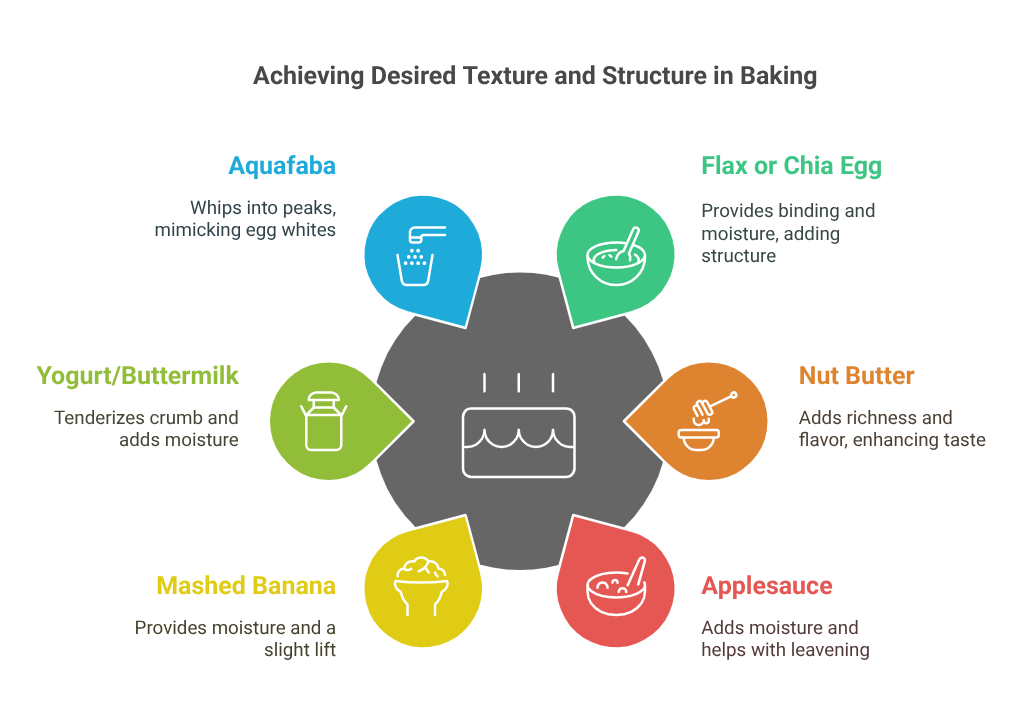
Use this table as a starting point. Remember that sometimes you might combine substitutes – for example, some vegan cake recipes use both flaxseed and applesauce (flax for binding, applesauce for moisture). It can be fun to experiment with blends to get the perfect texture. If one substitute isn’t giving you the result you want, try a different one next time or a combination.
The Ultimate Egg-Free Baking Guide (Recipes & Tips)
Baking without eggs is a bit of an art, but once you get the hang of it, you’ll churn out egg-free cakes, cookies, and breads that are just as delightful as traditional recipes. In this section, we’ll share an easy recipe and some pro tips for success in egg-free baking.
Egg-Free Chocolate Chip Cookies Recipe (Makes ~24 cookies) – a warm, chewy cookie that proves you don’t need eggs for outstanding results.
Ingredients:
- 2 tablespoons ground flaxseed (for flax “eggs”)
- 6 tablespoons water
- 2 1/4 cups all-purpose flour
- 1 teaspoon baking soda
- 1/2 teaspoon salt
- 1 cup (2 sticks) unsalted butter, softened (or plant-based butter for vegan)
- 3/4 cup granulated sugar
- 3/4 cup light brown sugar, packed
- 2 teaspoons pure vanilla extract
- 2 cups semi-sweet chocolate chips (dairy-free if vegan)
Instructions:
- Preheat & Prep Flax Eggs: Preheat your oven to 350°F (175°C). In a small bowl, combine the ground flaxseed with water (this mixture of 2 Tbsp flax + 6 Tbsp water replaces 2 eggs). Stir and let it sit for 5-10 minutes until it thickens and becomes gel-like. This flaxseed “egg” will bind the cookie dough.
- Mix Dry Ingredients: In a medium bowl, whisk together the flour, baking soda, and salt. Set aside.
- Cream Butter and Sugar: In a large bowl, use a mixer to cream the softened butter with the granulated and brown sugars until light and fluffy. This may take 2-3 minutes. Creaming creates air pockets that help leaven the cookies slightly.
- Add Flax Eggs and Vanilla: Pour in the thickened flaxseed mixture and vanilla extract. Beat until well incorporated. The mixture may look a bit looser than a typical egg-based batter, but it will come together once dry ingredients are added.
- Combine with Dry Ingredients: Gradually add the flour mixture to the wet ingredients. Beat on low speed or stir by hand just until a dough forms. Avoid over-mixing (which can develop too much gluten). The flax eggs will be doing the binding, and you’ll notice the dough holds together nicely.
- Stir in Chocolate Chips: Fold in the chocolate chips until evenly distributed. If the dough feels very soft, you can chill it for 15-20 minutes; flax egg dough can sometimes be slightly softer than egg-based, but chilling will firm up the butter again.
- Scoop and Bake: Scoop dough (about 1-2 tablespoons per cookie) onto an ungreased cookie sheet or one lined with parchment, spacing them ~2 inches apart. Bake at 350°F for 10-12 minutes, or until the edges are golden brown and the centers look just set.
- Cool: Let the cookies cool on the baking sheet for about 5 minutes (they will be a bit delicate right out of the oven), then transfer to a wire rack to cool completely. Enjoy your eggless chocolate chip cookies with a glass of milk or a dairy-free alternative!
These cookies come out with chewy centers and crisp edges, and nobody would guess they’re made without eggs. The flaxseed does an amazing job as a binder, and the extra water in the flax “eggs” keeps the cookies moist.
Baking Time Adjustments: One thing to note in egg-free baking is that you may need to pay attention to baking times and doneness cues a bit differently. Baked goods without eggs can sometimes take a minute or two longer to set, especially if you used a very moist substitute like fruit purée. Always use the visual and touch cues given in recipes (e.g., “bake until golden” or “until a toothpick comes out clean”) as your guide. If you check a cake and it seems a bit wet or jiggly in the center, give it a few more minutes and test again. It’s not unusual for an egg-free cake or brownie to need slightly longer, since eggs coagulate and firm up as they cook, providing structure – without that, the structure might set a tad later in the bake. Conversely, be careful not to overbake, as egg substitutes like flax and fruit can dry out if baked too long. It’s a balance, but with experience you’ll get it just right.
Ensuring the Right Texture: Here are some pro tips for getting the best rise, crumb, and moisture in your egg-free baked goods:
- Don’t Skip The Leaveners: When removing eggs, you often remove some leavening (especially if the recipe relied on whipped eggs or multiple eggs for lift). To compensate, you can slightly increase the baking powder or soda (by about 1/4 to 1/2 teaspoon more than the recipe calls for) when using a heavier substitute like banana or applesauce. This helps avoid a dense outcome. In our cookie recipe above, we didn’t need extra leavener because cookies are meant to be dense and we used flax (which doesn’t weigh it down much), but for a cake using applesauce, an extra pinch of baking powder is a smart addition.
- Combine Substitutes for Balance: Feel free to mix egg substitutes to harness the strengths of each. For example, if a recipe calls for 3 eggs, you might use 1 flax egg, 1/4 cup applesauce, and 3 tablespoons of aquafaba whipped up. The flax will bind, the applesauce will moisten, and the aquafaba will help with lift – together, they replicate the egg’s full profile. This combination approach can yield excellent textures, especially in things like cakes or muffins where eggs were providing multiple functions.
- Mix Gently and Don’t Overwork Batters: Without eggs, baked goods can sometimes be more sensitive to over-mixing (eggs in a batter can actually act as a tenderizer and moisture source that mitigates over-developed gluten). So when you’re stirring in that flax egg or applesauce, mix just until combined unless the recipe specifically says to beat more (some recipes need vigorous mixing for rise, but many do not). Over-mixing can make eggless cakes or muffins tough. A light hand = a lighter texture.
- Let Batters Rest (When Appropriate): This might sound counterintuitive (since we just said not to over-mix), but allowing a short rest can benefit some egg-free batters. For instance, a flaxseed egg in pancake batter will gel a bit more during a 5-10 minute rest, improving binding and giving you a fluffier pancake. Resting also lets starches absorb moisture. Just don’t let a batter with baking soda sit too long or you’ll lose the gas bubbles – 5 to 10 minutes is usually fine.
- Add a Touch of Extra Moisture for Big Swaps: If you’re removing more than 2 eggs from a recipe and not replacing them with something equally liquid, consider increasing another liquid slightly. For example, say you omit 3 eggs (which is about 3/4 cup volume) and replace with flax eggs (which is mostly water) – that should be fine. But if you replaced with something like 3 tablespoons of nut butter for each egg (minimal water), your batter might end up too dry. In such cases, a few tablespoons of non-dairy milk or water can help get the batter to the right consistency. The goal is to mimic the original batter’s look and feel.
- Use Quality Ingredients & Fresh Leaveners: This is true for all baking, but especially when pushing ingredients to their max. Fresh baking powder/soda (not expired) ensures you get the rise you expect, which is crucial when eggs aren’t there to help. Also, if making something like a meringue with aquafaba, use a pure, no-salt-added aquafaba for best results (salted chickpea liquid can be used, but it’s less ideal as it may taste saltier; if you do use it, omit other salt in the recipe).
- Expect Slight Differences & Embrace Them: Egg-free versions may not always be exact clones of the eggy original – for instance, an eggless sugar cookie might be a bit more crumbly, or an egg-free muffin might be slightly denser. But they can still be absolutely delicious. Sometimes the differences are positive: many find vegan muffins and quick breads are moister and stay fresh longer (eggs can dry out over time, whereas fruit purees keep things moist). So, if at first bite you notice a minor difference, remember that it’s part of the charm of egg-free baking. With the right technique, you won’t miss the eggs at all, and your treats will likely get devoured just as fast!
By following these tips and using the guide above to choose your substitute, you’ll soon find that baking without eggs is not daunting at all. In fact, it opens up a world of creative baking. You might discover new flavors and textures you love (for example, banana in pancakes or the nutty note of flax in bread). Plus, you’ll be able to accommodate those with dietary restrictions or when the coop is empty.
(And for the final Martha Stewart touch:) Always remember to preheat your oven, measure accurately, and trust your baking instincts. Check on your creations a minute or two early until you get familiar with how egg-free versions bake up. Soon, how to bake without eggs will be second nature to you.
Summary
Eggs are undoubtedly a multi-tasking ingredient in baking, but as we’ve explored, there’s a bounty of egg substitutes for baking that can step in with great success. To recap, if you need a binding agent for your cookies, go for a flaxseed or chia egg, a dollop of nut butter, or a reliable commercial egg replacer. For fluffy cakes and muffins, applesauce or yogurt can add moisture, while aquafaba or a vinegar and baking powder combo can give you lift. In pancakes and waffles, focus on leavening substitutes like carbonated water or baking powder with vinegar to keep them light. And for those elegant meringues or macarons, aquafaba has proven itself as a worthy stand-in for egg whites, creating foams and peaks like a dream.
The best egg substitute really depends on the role eggs play in your specific recipe – but now you have the ultimate guide to navigate those choices. Don’t be afraid to experiment: perhaps start with a tried-and-true swap (like flax eggs in brownies, or mashed banana in a muffin recipe), and once you see how seamless it is, venture into more complex bakes with confidence. Egg-free baking can truly be just as delicious and indulgent as traditional baking. Many folks even prefer the results of some eggless recipes, finding them moister or more flavorful.
Remember, baking is a science but also an art. Use this guide as your scientific foundation – the ratios and recommendations are here to set you up for success, backed by kitchen tests and even a bit of food science). From there, let your inner artist (or artisan baker) shine. Adjust seasonings, add chocolate chips or nuts, play with those fruit purees for extra flavor, and most importantly, enjoy the process.
Next time you’re out of eggs or catering to an egg-free diet, you’ll know exactly how to proceed. Whether you’re making egg-free cookies, whipping up a birthday cake without a single shell crack, or perfecting vegan pancakes on a Sunday morning, you’ve got a basket of options to choose from.
Happy baking! With a pinch of creativity and this ultimate guide in hand, you can create scrumptious treats that are egg-free, stress-free, and equally delightful. And as Martha Stewart might say, “It’s a good thing” – both for those enjoying the baked goods and for the chickens taking the day off. Feel free to explore more egg-free baking recipes and product recommendations on our site, and embrace the delicious possibilities of baking without eggs. Bon appétit!


